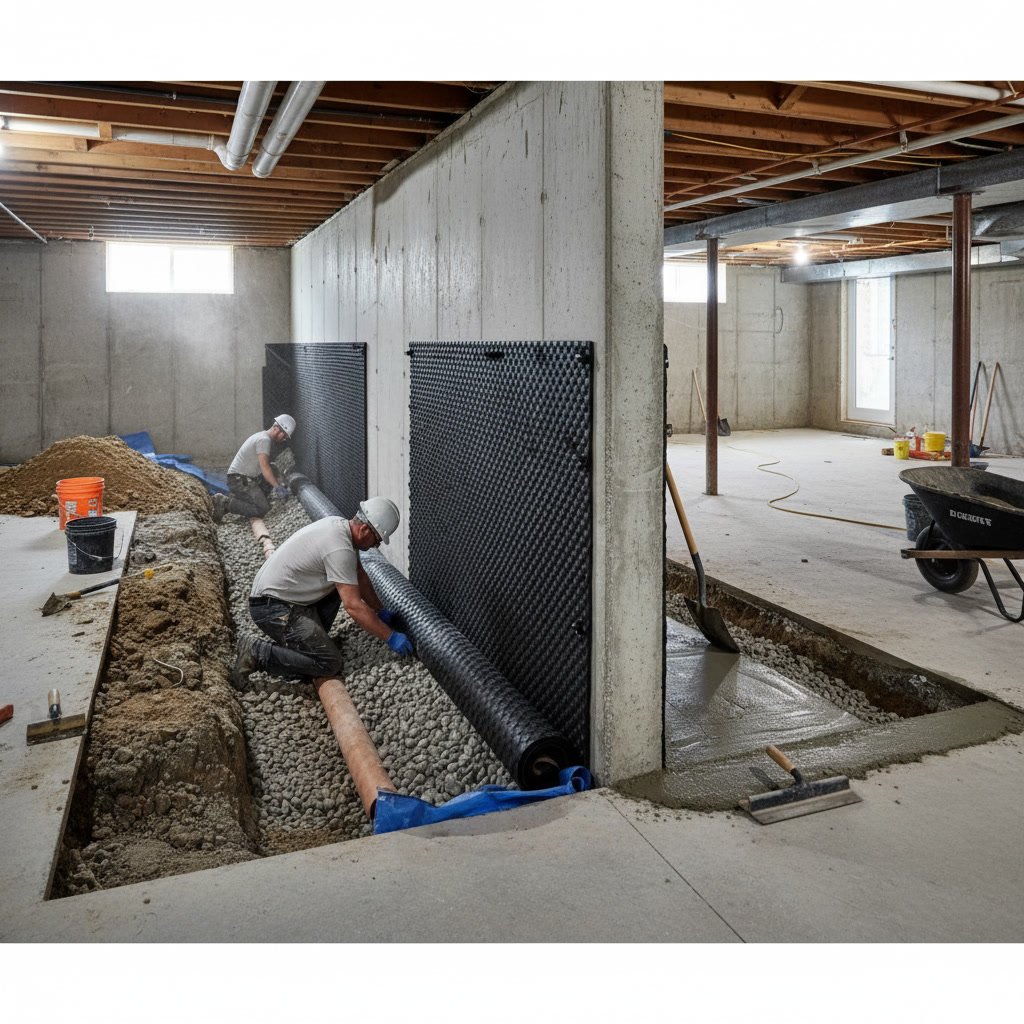
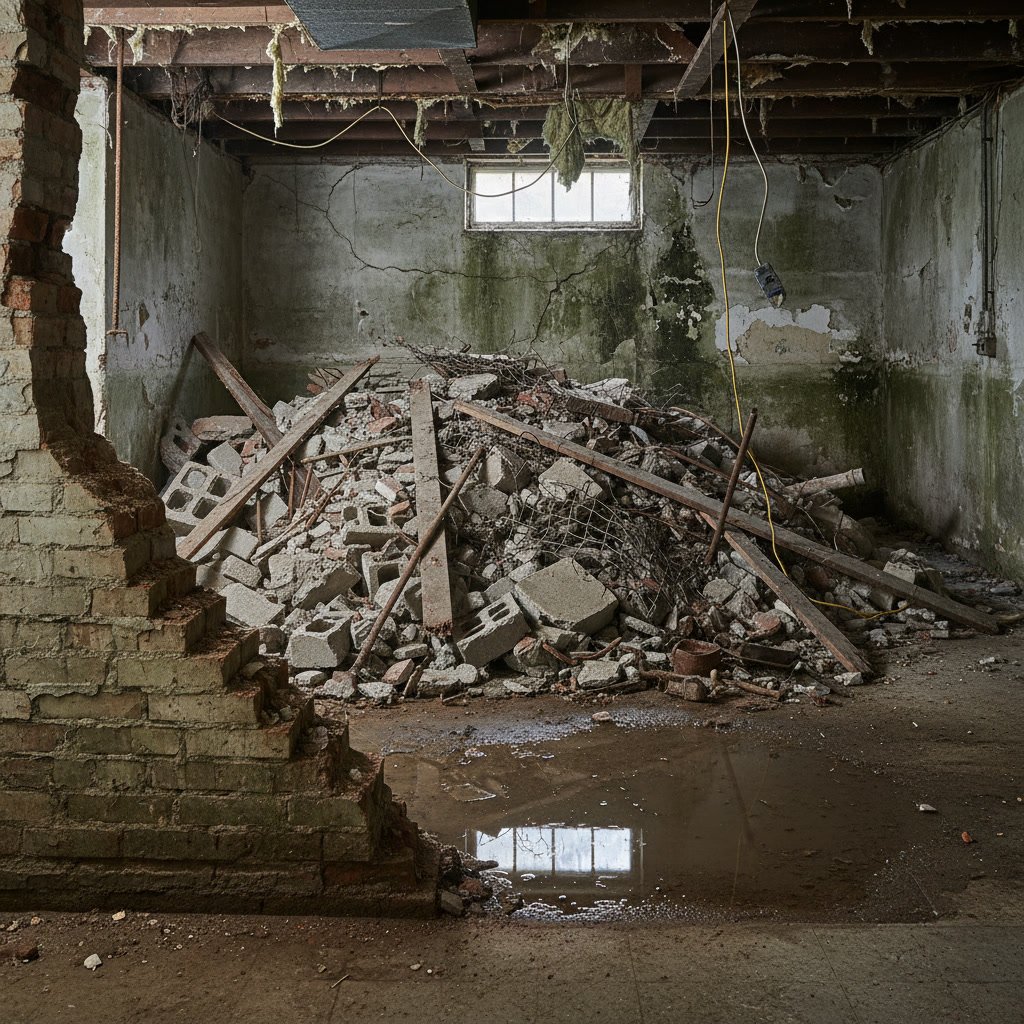
When severe structural damage, saturated materials, or extensive deterioration exists in your lower level, simply installing a drainage system or sump pump will not solve the problem. In these cases, your basement needs demo work first. Professional demolition and removal clears away compromised concrete, rotted framing, mold-laden drywall, and other failing materials so that waterproofing solutions can actually protect your home long-term instead of covering up serious issues.
Why Some Basements Require Demolition Before Waterproofing
Waterproofing systems work by managing water flow and moisture. They cannot repair structural damage or restore materials that have already failed. When foundation walls show significant cracking, when floor slabs have heaved or settled unevenly, or when wooden framing has rotted through, you face conditions that no drainage system can fix alone.
Attempting to waterproof over damaged materials wastes money and creates false security. Water will continue to exploit cracks and voids. Mold will keep growing behind finished walls. Structural issues will worsen. The only effective approach removes the compromised materials first, addresses the underlying problems, then installs waterproofing that can actually function as designed.
Visible Cracks and Structural Movement in Foundation Walls
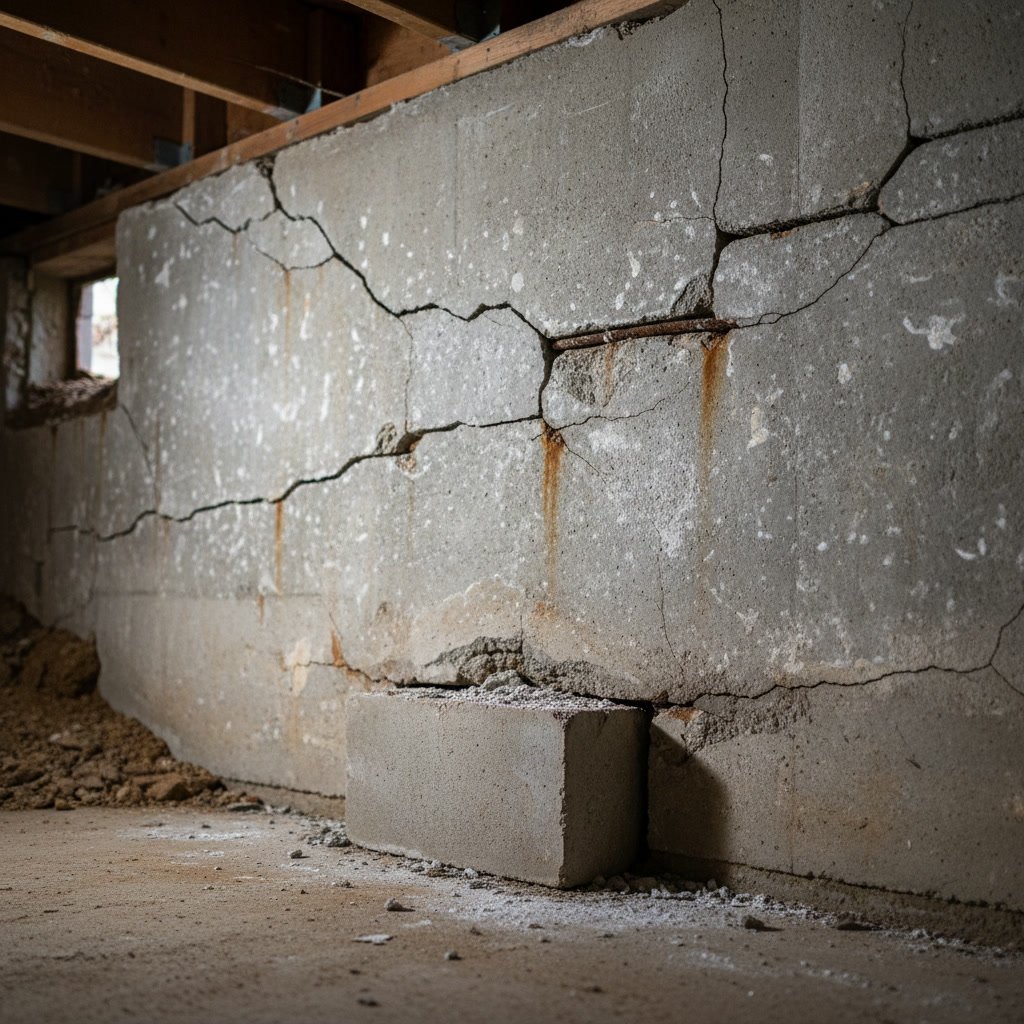
Horizontal cracks wider than 1/8 inch, stair-step cracks in block walls, or vertical cracks that leak water during rain events signal foundation movement. These conditions often require removing interior finishes to expose the full extent of damage. In some cases, portions of the concrete itself need removal and replacement before basement waterproofing systems go in.
Bowing or bulging walls indicate soil pressure overwhelming the foundation. This situation usually demands structural reinforcement. You cannot install an effective interior drainage system against a wall that is actively failing. The demo process exposes the wall fully, allows for proper bracing or anchoring, and creates the stable surface waterproofing requires.
Water-Damaged Concrete Slabs That Have Lost Integrity
When a basement floor shows widespread spalling (surface flaking), deep pitting, or areas that sound hollow when tapped, the concrete has likely deteriorated beyond simple repair. Constant groundwater infiltration, freeze-thaw cycles, or poor initial installation can break down the slab over time. Installing drainage systems into compromised concrete creates weak points that fail quickly.
Professional demolition removes the damaged slab sections or, in severe cases, the entire floor. This allows for proper grading of the subbase, installation of vapor barriers, and pouring of a new structural slab that will support waterproofing equipment and last for decades. Skipping this step leaves you with a system built on a crumbling foundation.
Persistent Efflorescence and Mineral Deposits
White, chalky deposits on concrete or block walls indicate water is moving through the masonry, dissolving minerals, and depositing them on the surface. Light efflorescence might not require demo, but when it appears thick, crusty, or accompanied by soft, crumbling concrete, the materials have absorbed so much water that their structure is compromised.
These conditions often hide deeper problems. Behind the mineral buildup, you may find spalling concrete, corroded rebar, or deteriorated mortar joints. Proper assessment requires removing finishes and sometimes test sections of the concrete itself to evaluate what lies beneath.
Signs of Active Mold Growth Behind Finished Walls
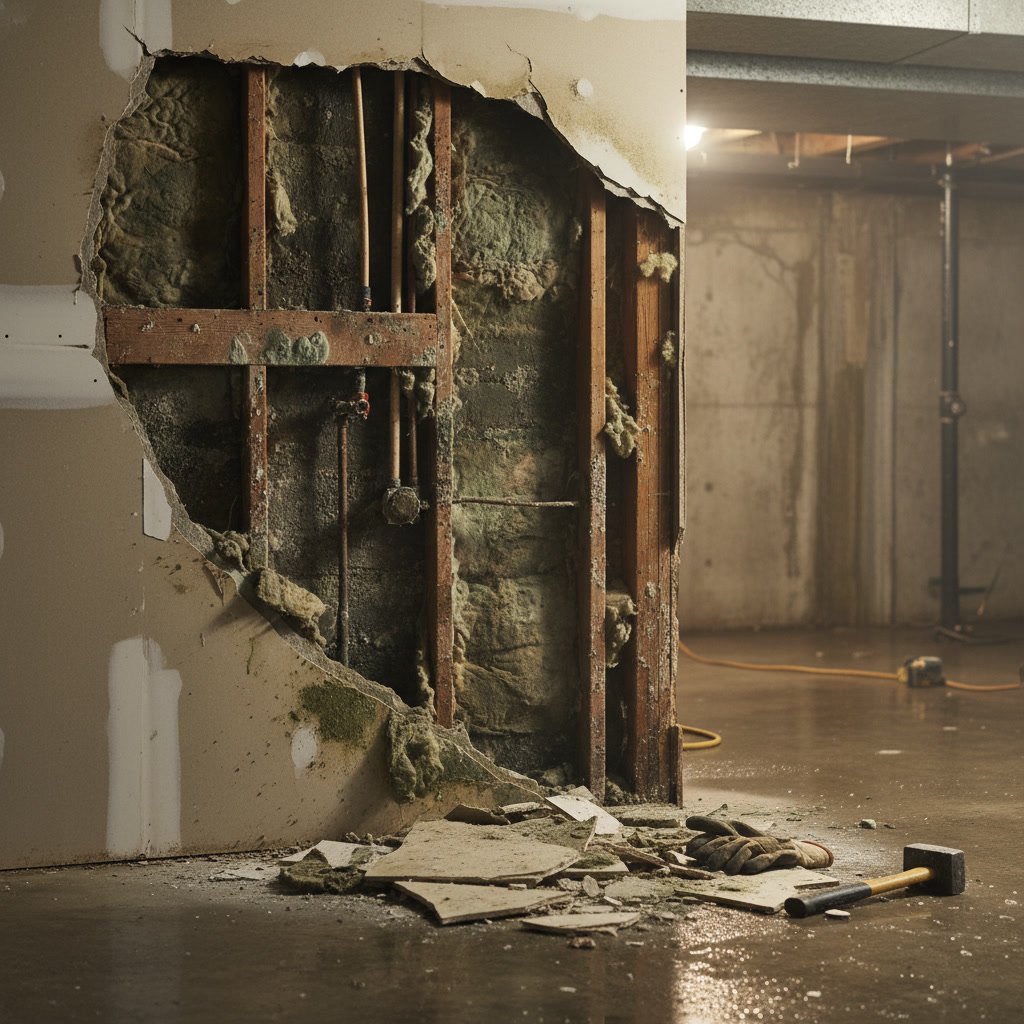
Musty odors, visible mold spots on baseboards, or discoloration bleeding through paint all suggest mold colonies thriving in hidden cavities. Once mold establishes itself in drywall, insulation, or wood framing, surface cleaning does not solve the problem. The contaminated materials must come out entirely.
This is especially true in older finished basements where previous owners may have covered moisture problems with paneling or drywall instead of addressing the source. Demo and removal exposes the extent of contamination, allows for proper remediation, and creates a clean slate for moisture control systems that prevent recurrence.
Rotted or Compromised Wood Framing and Supports
Wooden sill plates, floor joists, or support columns that show soft spots, dark staining, or visible rot cannot support a structure safely. Water infiltration over months or years breaks down wood fiber. Even if the visible portion looks intact, the interior may have lost all strength.
Removing damaged framing is not optional. It is a safety and code requirement. Once the compromised wood is out, you can install proper structural replacements, then proceed with waterproofing that keeps moisture away from the new materials. Trying to work around rotted framing leaves your home at risk of serious structural failure.
Common Demo Scenarios in More Dover Basements
Homes in More Dover and surrounding New Hampshire towns often sit on soils with high water tables and seasonal freeze-thaw movement. These conditions accelerate foundation stress. Many older homes were built with minimal waterproofing, leading to decades of slow water damage that only becomes apparent when finishing or upgrading the basement.
Common scenarios include removing old oil tanks that leaked and contaminated soil, tearing out asbestos-containing materials from mid-century construction, and clearing out multiple layers of failed DIY repairs. Each situation is unique, but the pattern is consistent. You cannot build a reliable waterproofing system on a compromised foundation.
What Professional Demolition Includes and Why DIY Often Fails
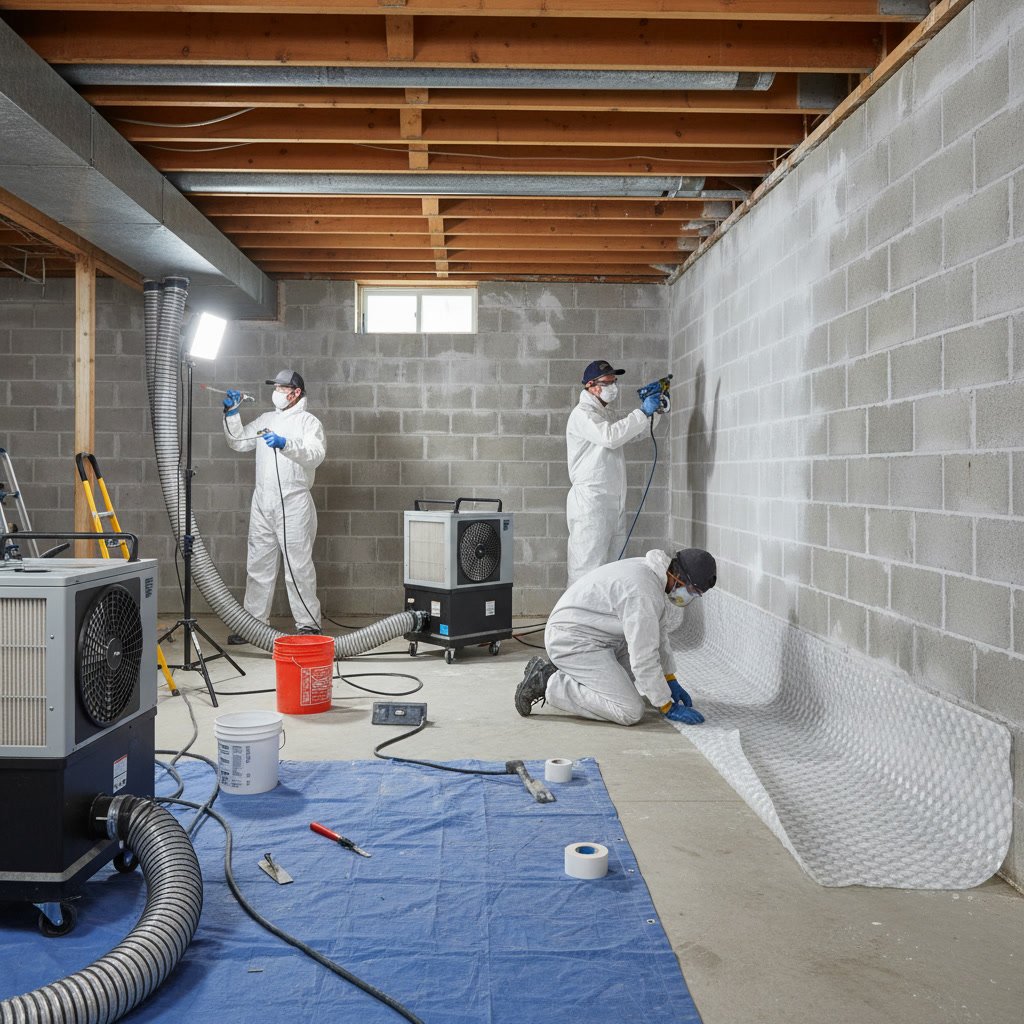
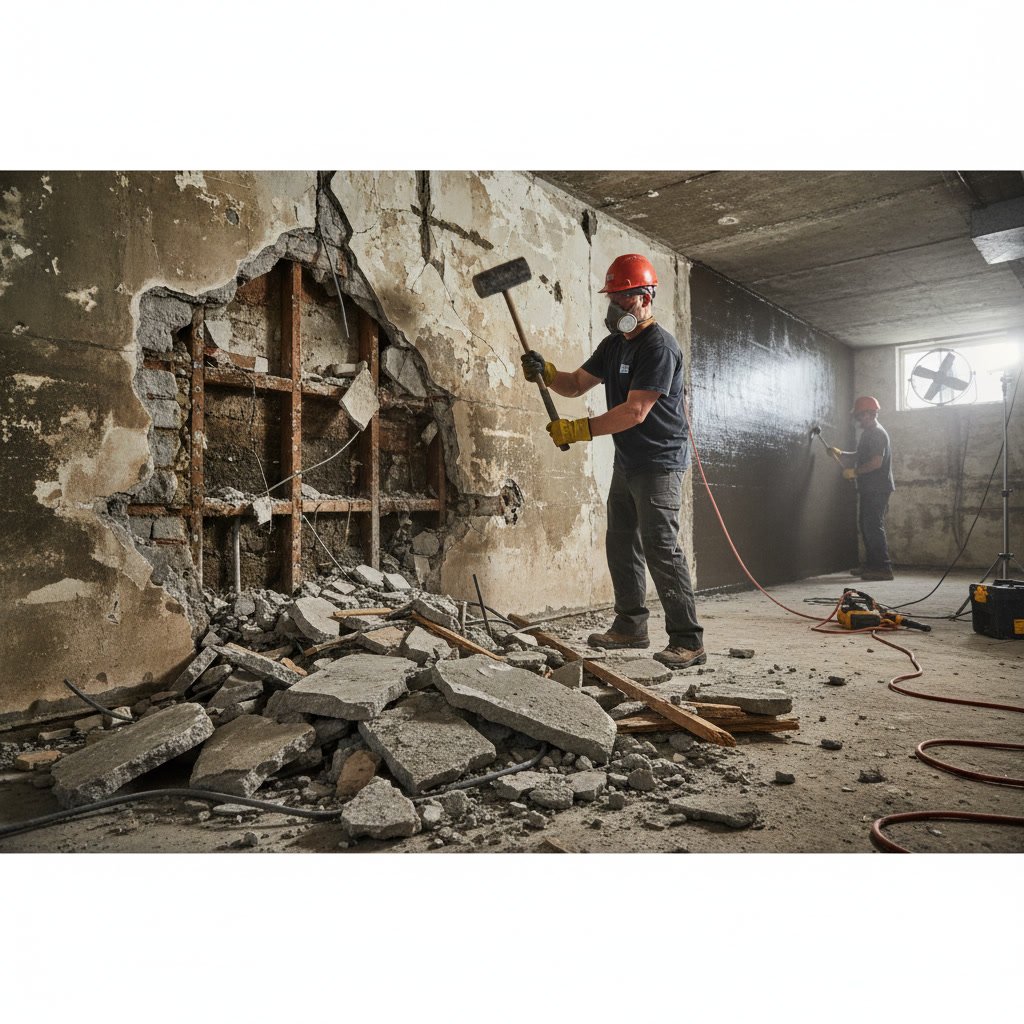
Professional basement demo involves far more than swinging a sledgehammer. It starts with protecting the rest of your home using dust barriers and negative air pressure. Crews then systematically remove materials in the correct order to avoid causing additional structural damage. Concrete cutting uses water suppression to control silica dust. Debris goes into proper disposal containers, and hazardous materials follow regulated handling procedures.
DIY attempts often create more problems than they solve. Homeowners underestimate the volume of debris, overlook hidden utilities, and lack the equipment to handle heavy concrete. More critically, they miss structural issues that only trained eyes recognize. A professional assessment identifies what must go and what can stay, saving money while ensuring the job is done right.
How Demo Preparation Improves Waterproofing Performance
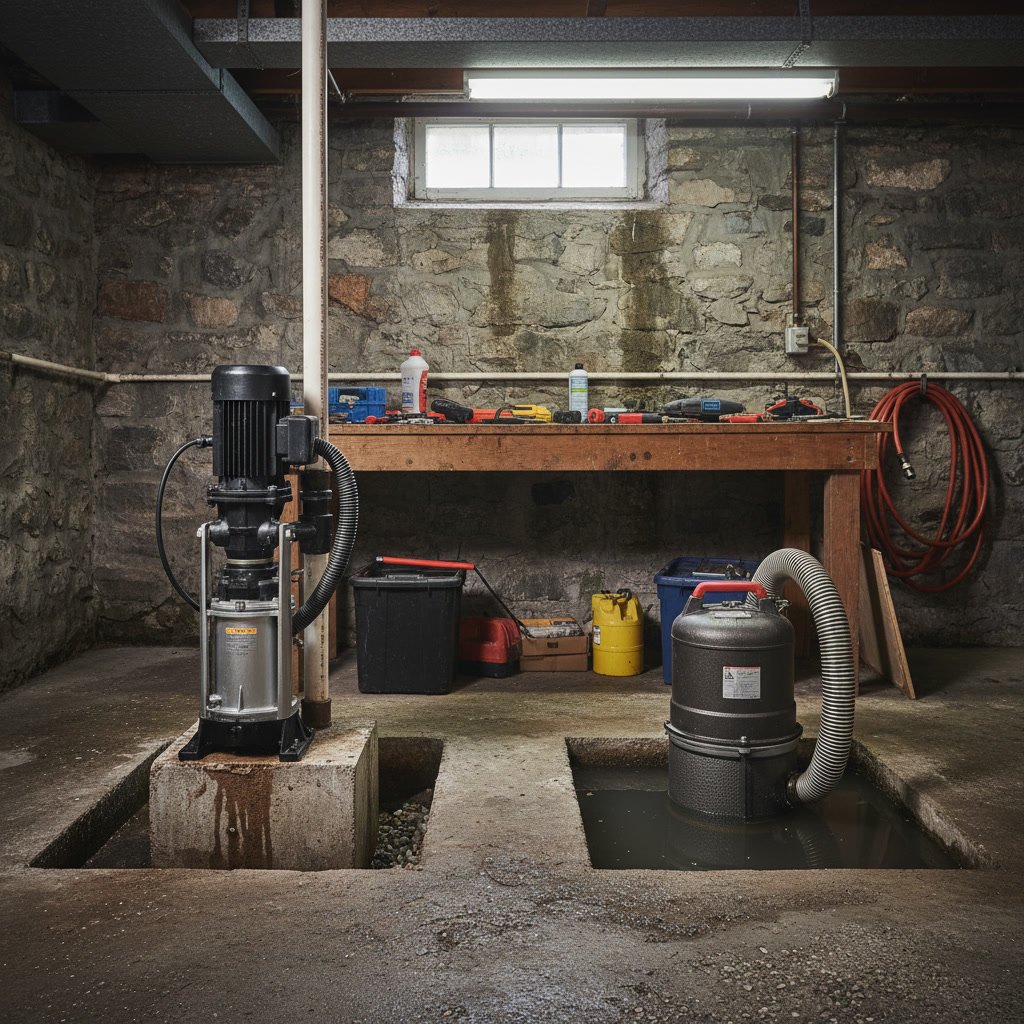
Starting with a clean, structurally sound space allows waterproofing systems to perform as engineered. Sump pumps sit on stable bases instead of cracked concrete. Drainage channels run in straight lines without workarounds for damaged sections. Vapor barrier installation adheres to solid surfaces that will not crumble or shift.
This preparation also makes future maintenance easier. When all materials are sound and systems are properly installed, routine inspections are straightforward. You avoid the pattern of band-aid repairs that plague basements where waterproofing was layered over existing damage.
The Connection Between Demo Work and Long-Term Cost Savings
Demo and removal adds upfront cost to a waterproofing project, but it prevents far larger expenses down the road. When you skip necessary demolition, waterproofing systems fail prematurely. You end up paying twice: once for the inadequate initial work, again for the proper fix that should have happened first.
Insurance claims for structural failure or mold remediation can reach tens of thousands of dollars. Homes with documented water damage or incomplete repairs lose value and become harder to sell. Investing in thorough demo when needed protects both your immediate comfort and your long-term financial investment.
When to Move Forward with Confidence
Recognizing the signs that your space requires demolition before waterproofing is the first step toward a lasting solution. Cracks that leak, concrete that crumbles, mold behind walls, and rotted framing all demand attention that goes beyond surface fixes. Addressing these issues completely, with professional demolition followed by expert waterproofing, transforms a problem basement into a dry, healthy space you can use and enjoy for decades.
The family-owned team at NH Dry Basement LLC has helped homeowners throughout the region make these tough calls, providing honest assessments and thorough solutions. If you are seeing warning signs in your lower level and want a straightforward evaluation of what needs to happen next, reach out at +16032359598 to schedule a consultation.