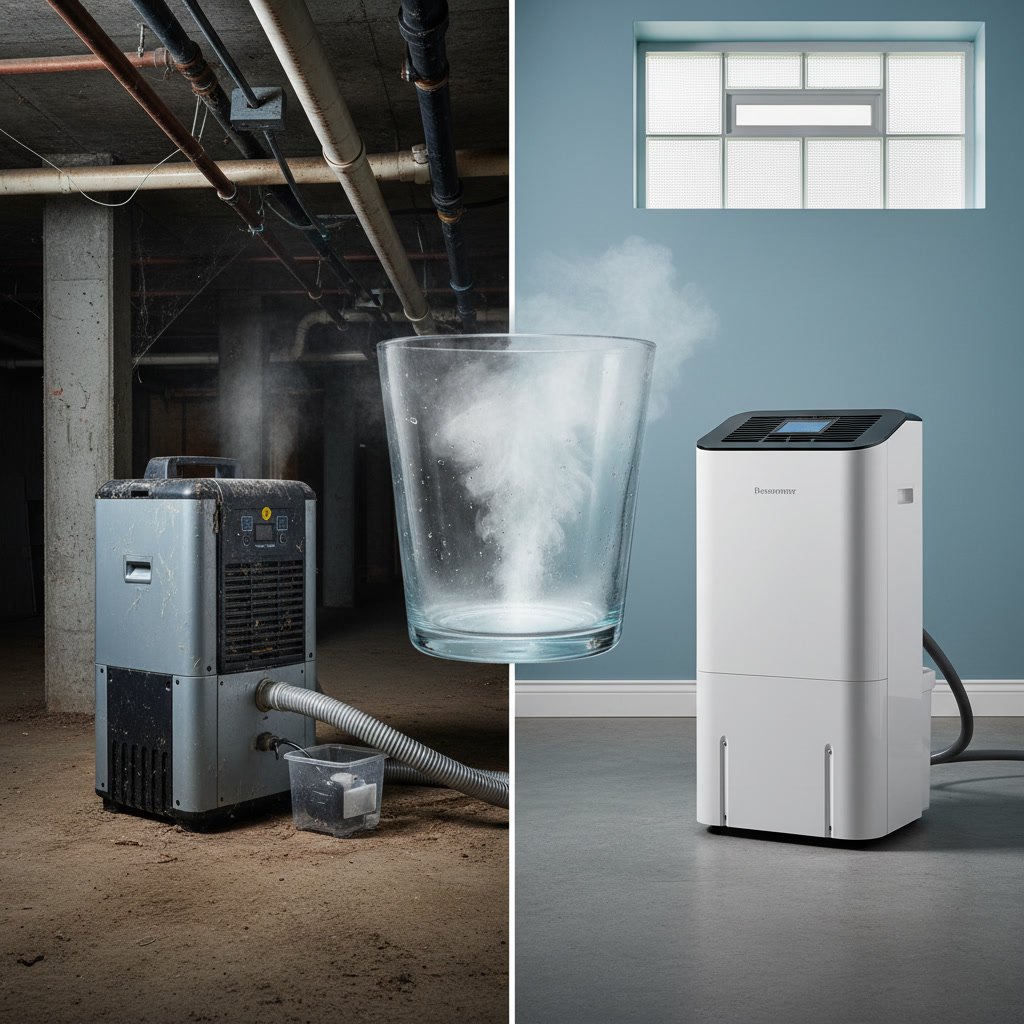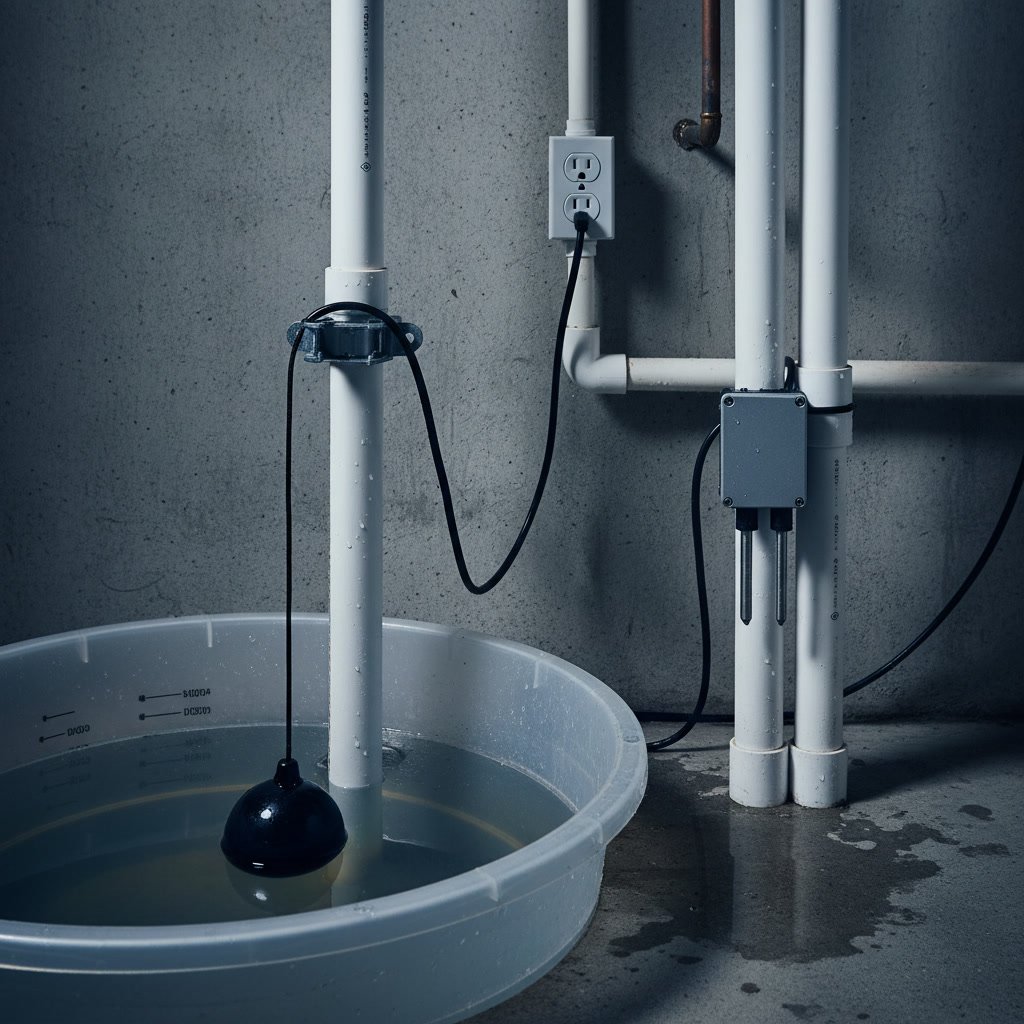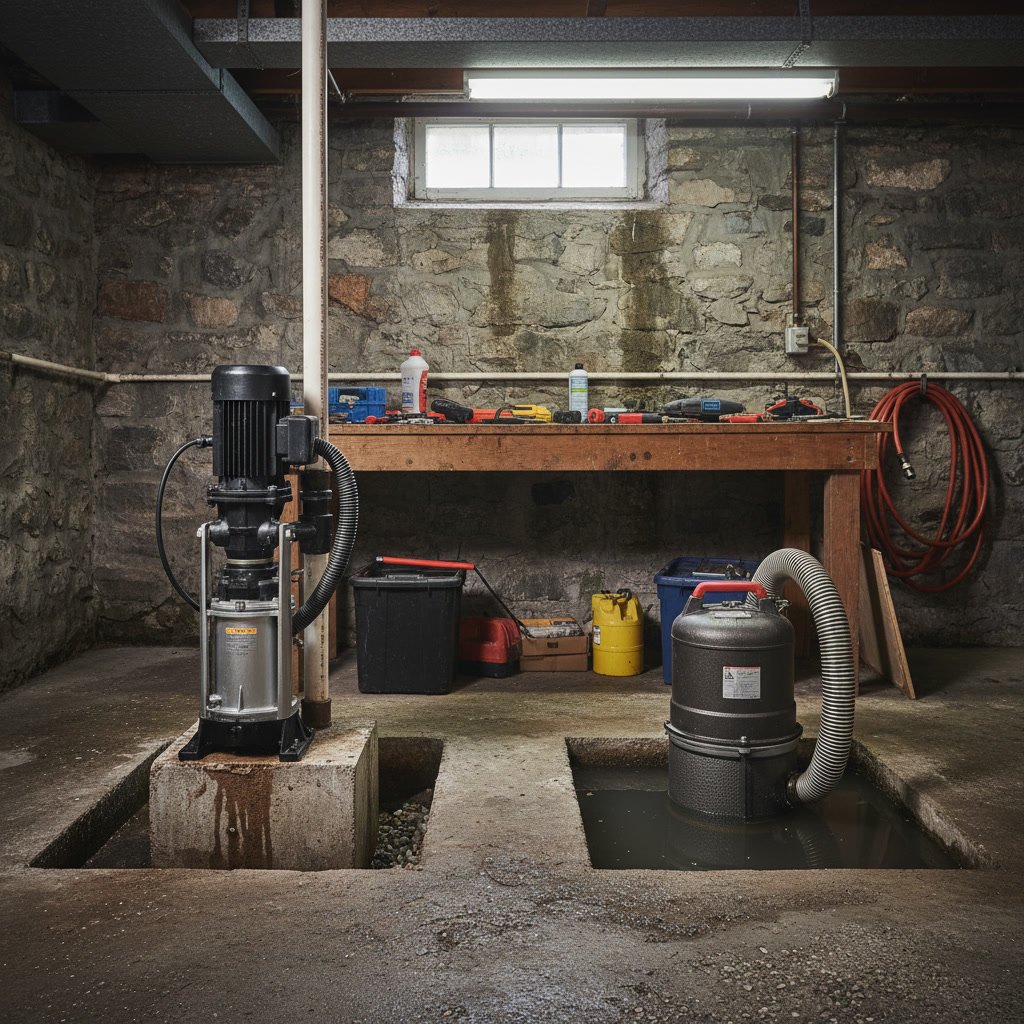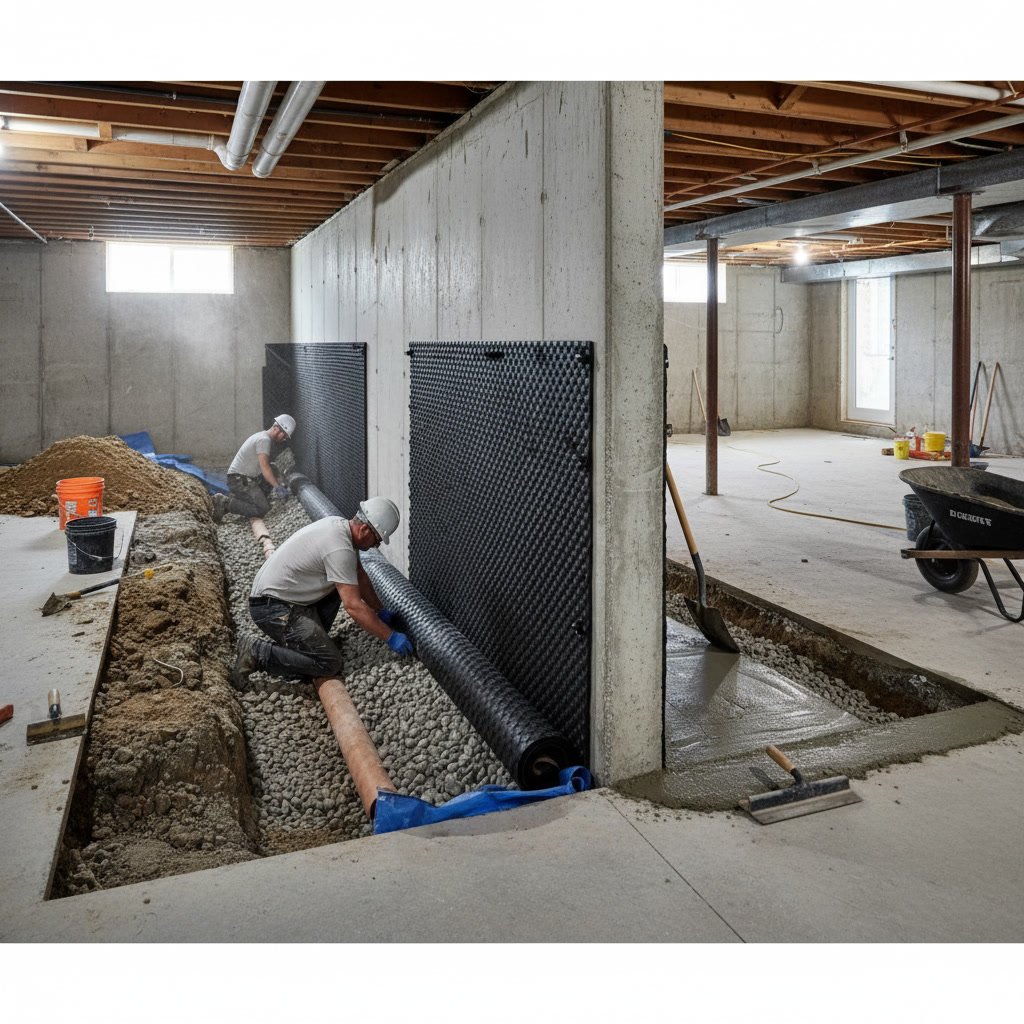
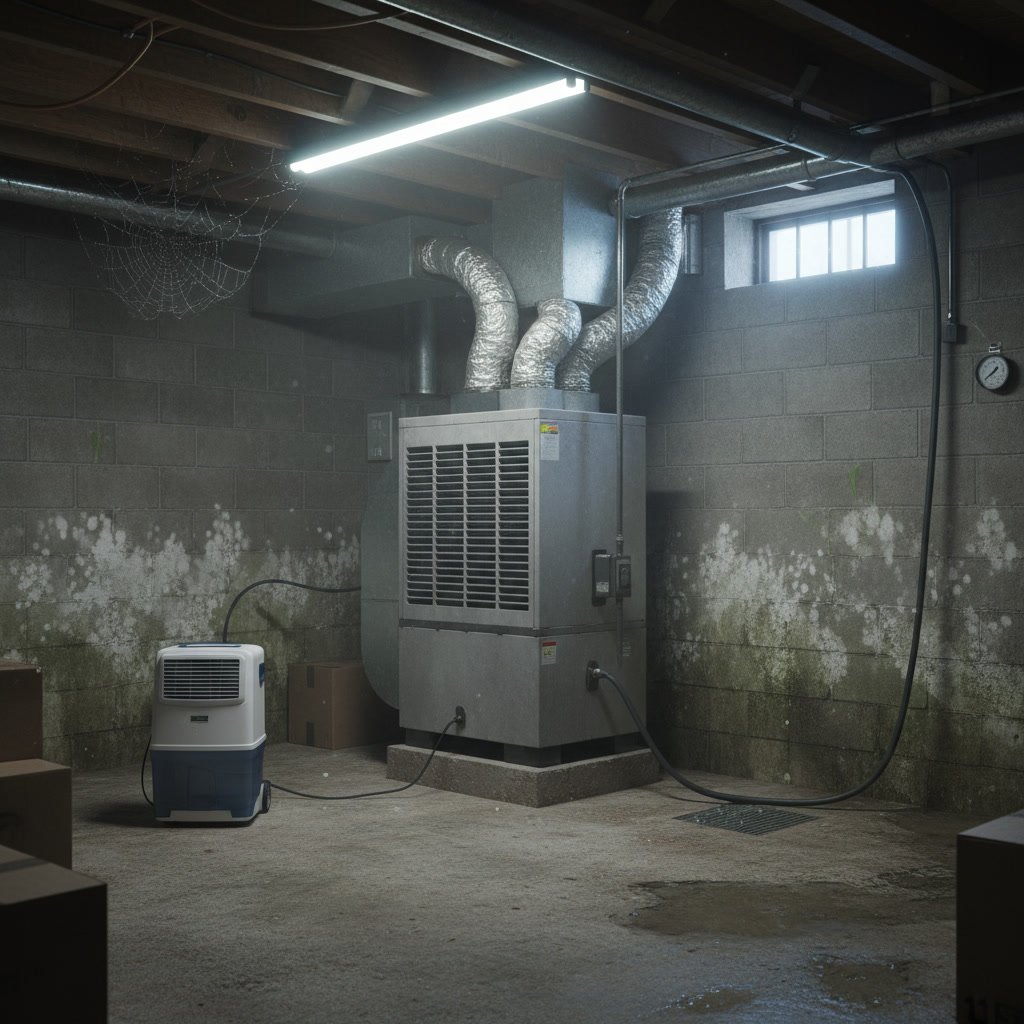
A basement dehumidification system becomes necessary when portable units empty multiple times daily, musty odors persist despite constant operation, or visible condensation appears on walls and pipes. These signs indicate your space produces more moisture than a small appliance can handle, requiring a permanent solution tied directly into your drainage infrastructure.
Many homeowners start with a portable dehumidifier from the hardware store. For some basements, especially in newer construction with proper grading and minimal groundwater intrusion, these units work fine. But New Hampshire basements face unique challenges. Our freeze-thaw cycles create foundation cracks. Spring meltwater pushes against basement walls. Summer humidity combines with cool concrete to create constant condensation. When these factors combine, a 50-pint portable unit becomes a losing battle.
Understanding the Limitations of Portable Units
Portable dehumidifiers handle small volumes of air in confined spaces. Most consumer models process 30 to 70 pints per day under ideal conditions. The problem is that basements rarely offer ideal conditions. Temperature affects efficiency drastically. When your basement drops below 65 degrees, most portable units lose 30 to 40 percent of their rated capacity. Some models shut down completely below 60 degrees.
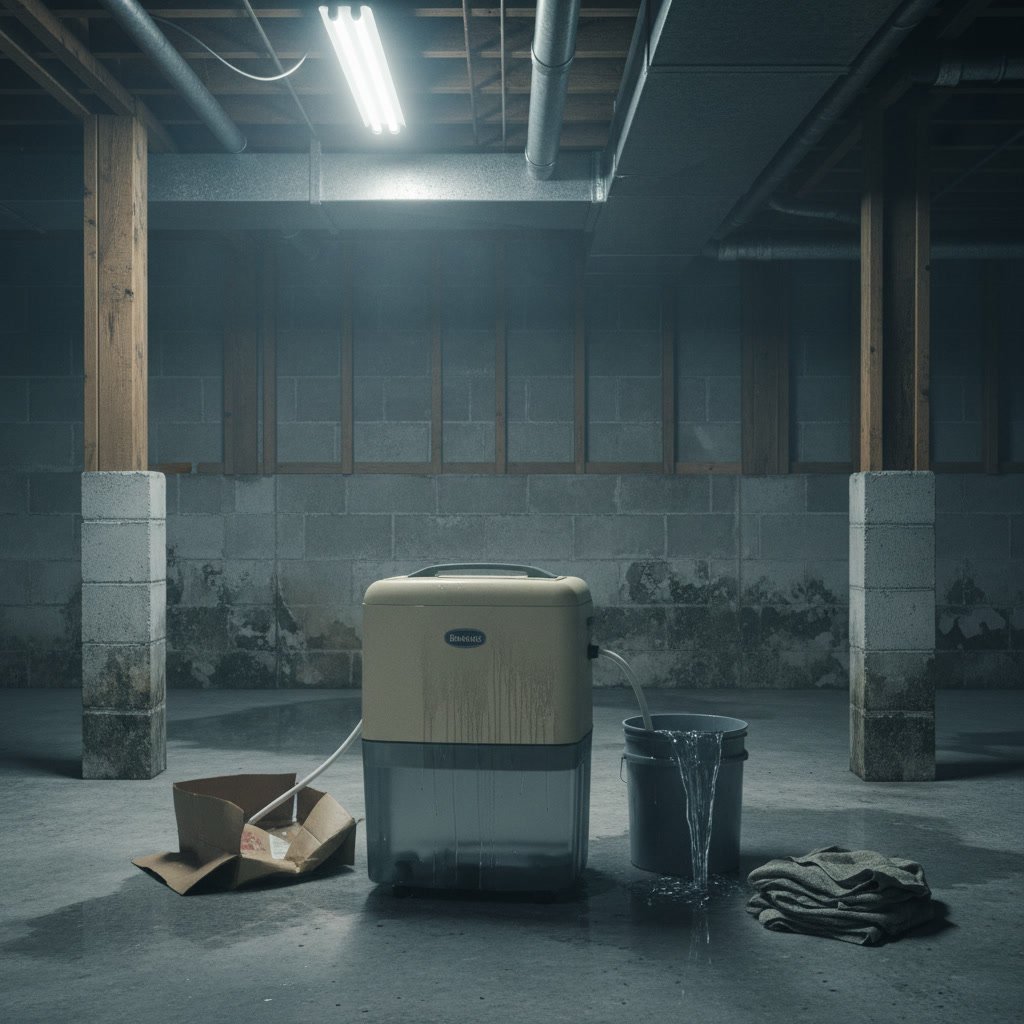
The bucket system creates another limitation. Even models with hose attachments often lack proper gravity drainage options. You’re either emptying buckets twice daily or running a garden hose across your basement floor to a floor drain. Neither solution addresses the root problem, which is that your space generates moisture faster than the unit can remove it.
Your Portable Unit Runs Constantly But Moisture Remains
This is the clearest warning sign. When your dehumidifier runs 24 hours a day and the humidity reading stays above 60 percent, your basement produces more moisture than the unit can extract. Portable models cycle on and off based on the target humidity level. Continuous operation means the machine never reaches its goal.
Check the actual humidity level with a separate hygrometer placed away from the dehumidifier itself. Units with built-in sensors can give false readings based on their immediate environment. If your basement consistently measures above 55 percent humidity despite a running dehumidifier, you need more capacity than a portable unit provides.
Visible Water Stains or Efflorescence on More Dover Walls
White, chalky deposits on concrete walls signal water moving through your foundation. Called efflorescence, these mineral deposits appear when water carries dissolved salts through concrete and evaporates on the surface. A portable dehumidifier cannot address this issue because the moisture source is active water intrusion, not just ambient humidity.
Water stains on walls or floors indicate periodic flooding or seepage. Even if the surface dries between events, moisture remains trapped in the concrete and framing. This hidden dampness feeds mold growth and wood rot that a surface-level portable unit cannot reach. Professional basement dehumidification systems work in conjunction with proper waterproofing to address both the water source and the resulting humidity.
Musty Odors That Return Within Hours of Cleaning
That distinctive basement smell comes from microbial volatile organic compounds, chemicals released by mold and bacteria as they digest organic materials. If you clean surfaces thoroughly and the odor returns within a day or two, you have active mold growth in hidden locations. Wall cavities, insulation, stored cardboard boxes, and wooden structural members all provide food sources.
Mold spores need three things to grow: organic material, temperatures above 40 degrees, and humidity above 60 percent. Your portable unit might lower the air humidity in the center of your basement, but it creates no airflow behind stored items or inside wall cavities. Professional systems include proper air circulation strategies that address the entire space, not just the area near the unit.
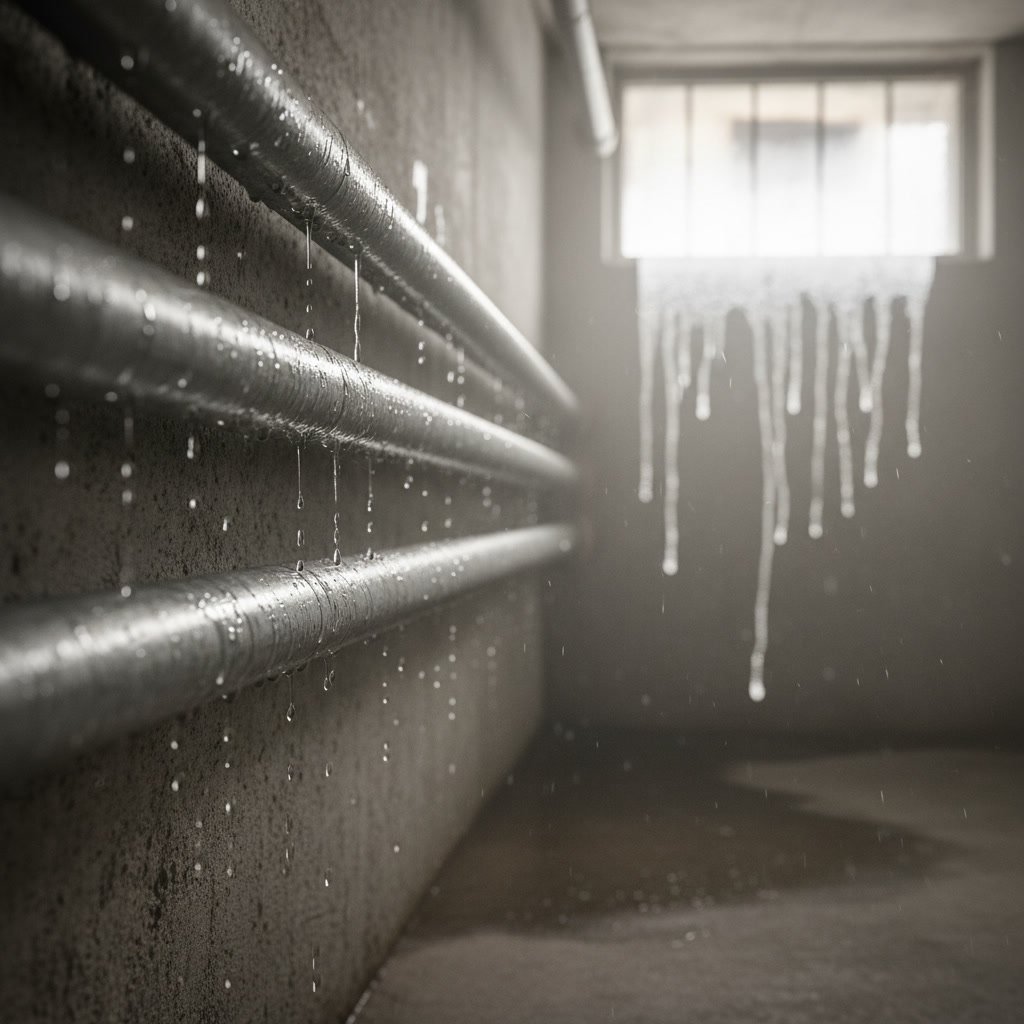
Condensation on Pipes, Windows, or Concrete Surfaces
Water droplets forming on cold surfaces indicate your air holds more moisture than those surfaces can tolerate. This happens when warm, humid air contacts cold concrete walls, cold water pipes, or single-pane basement windows. The air temperature drops at the contact point, reducing its moisture-carrying capacity. The excess moisture condenses into liquid water.
A portable unit placed in the middle of your basement cannot prevent this localized condensation because it doesn’t create sufficient air movement near walls and corners. Professional ventilation systems pair with whole-house dehumidifiers to maintain consistent temperature and humidity throughout the entire space. This prevents condensation before it forms rather than attempting to remove humidity after the damage occurs.
Buckled Wood Floors or Warped Trim on the First Floor
Moisture doesn’t stay confined to basements. It rises through floor joists and into first-floor living spaces. Wood flooring absorbs this moisture and expands, creating cupping, crowning, or buckling. Baseboards and door trim show similar warping. These problems indicate severe basement moisture that has overwhelmed your portable unit’s capacity.
Fixing the flooring without addressing basement humidity wastes money. The wood will warp again within months. The moisture source must be controlled first. Many homeowners discover this after replacing floors twice before finally addressing the basement environment.
Comparing Portable Units to Professional Systems
Portable dehumidifiers process 30 to 70 pints daily, cover 500 to 2,000 square feet, require manual drainage or frequent emptying, shut down in cold temperatures, and last three to five years with regular use. Professional basement systems process 90 to 135 pints daily, cover entire basements regardless of size, connect directly to floor drains or sump pumps, operate efficiently at temperatures down to 40 degrees, and last 10 to 15 years with proper maintenance.
The upfront cost difference is significant. A quality portable unit costs 200 to 400 dollars. A professional system installed by NH Dry Basement LLC runs several thousand dollars depending on your basement size and specific needs. But the professional system addresses moisture comprehensively rather than treating symptoms. When combined with proper drainage systems and waterproofing, it prevents the structural damage and health issues that cost far more to remediate later.
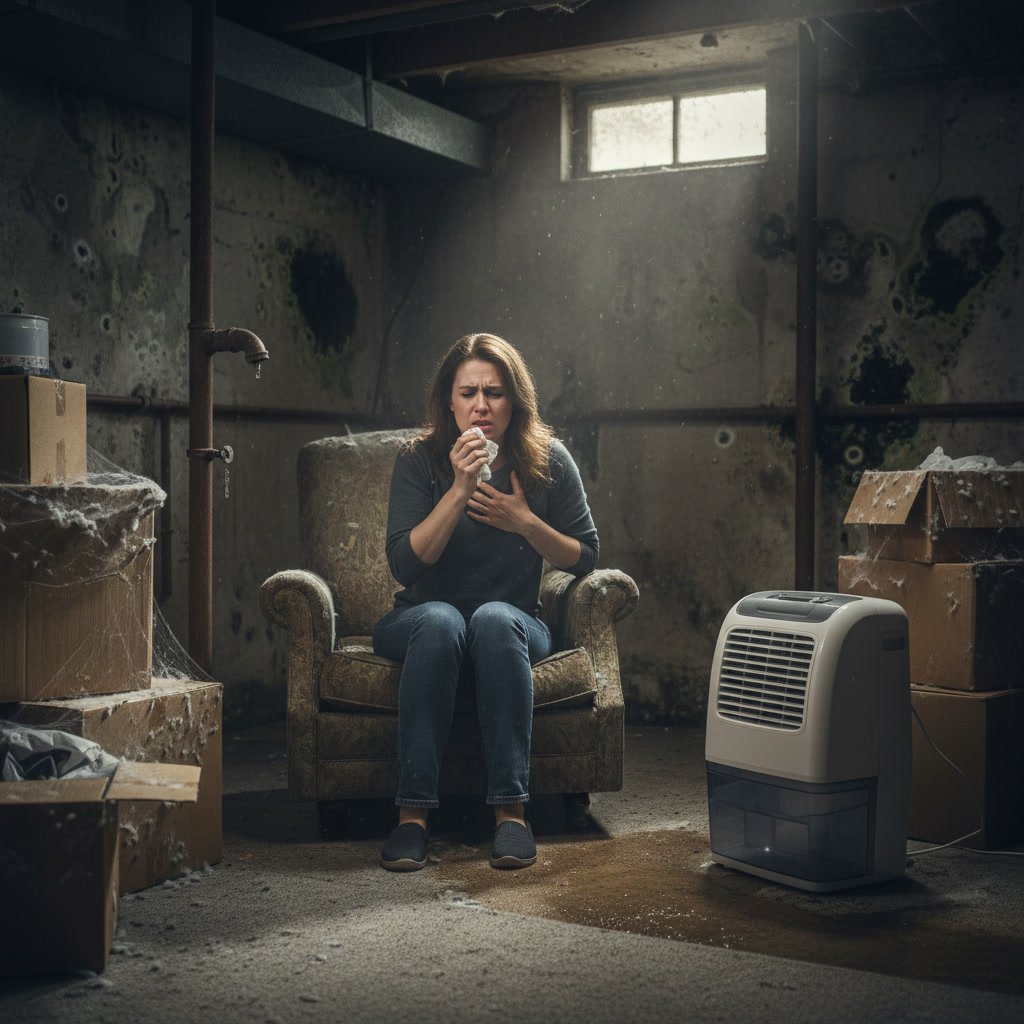
Increased Allergy Symptoms or Respiratory Issues
Mold spores, dust mites, and bacteria thrive in humid environments. All three produce allergens that trigger respiratory symptoms. If household members experience worsening asthma, increased sinus congestion, or persistent coughing that improves when they leave the house, basement moisture likely contributes to indoor air quality problems.
Dust mites specifically require humidity above 50 percent to survive. Their waste products are a leading cause of indoor allergies. Controlling humidity below this threshold eliminates their habitat. A portable unit might achieve this in the immediate area around the machine, but it cannot maintain consistent low humidity throughout a basement with active moisture sources. The relationship between mold prevention and proper humidity control is direct and measurable.
Your Electric Bill Spikes During Summer Months
A portable dehumidifier running constantly draws 300 to 700 watts depending on its size. Over a month, this adds 40 to 75 dollars to your electric bill. Professional systems use more powerful compressors but cycle on and off based on actual humidity levels rather than running continuously. They also operate more efficiently because they’re sized correctly for your space and maintain target humidity rather than fighting a losing battle.
The efficiency difference becomes more pronounced when you factor in wasted energy. A portable unit that runs 24 hours daily but never achieves target humidity wastes electricity without delivering results. A properly sized professional system reaches and maintains optimal humidity levels, then cycles off until needed. Over a year, the energy savings offset a significant portion of the installation cost.
You Store Valuable Items That Show Moisture Damage
Photographs curl. Books develop wavy pages. Tools rust. Furniture joints loosen as wood swells and shrinks. These signs indicate humidity levels that fluctuate too widely for your portable unit to control. Valuable items need consistent humidity between 30 and 50 percent year-round.
Insurance rarely covers moisture damage to stored items because it’s considered preventable maintenance rather than a sudden loss. Replacing family photographs, inherited furniture, or specialized tools costs far more than installing proper humidity control. The investment in a professional system protects both your home’s structure and the irreplaceable items you store within it.
Making the Switch to Permanent Protection
Recognizing these warning signs early prevents expensive damage. Water stains, persistent odors, and visible condensation indicate problems that worsen over time. Structural wood rot, foundation deterioration, and mold contamination become progressively more expensive to remediate the longer they continue.
A professional assessment identifies your specific moisture sources. Some basements need vapor barrier installation in addition to dehumidification. Others require sump pumps or improved surface grading. The dehumidification system becomes one component of a complete moisture management strategy tailored to your home’s specific conditions rather than a standalone appliance fighting symptoms.
If your basement shows any combination of these warning signs, your portable unit has reached its limits. NH Dry Basement LLC provides free assessments for homeowners throughout the Seacoast region who want to understand their moisture problems and explore permanent solutions. Our family-owned business focuses on solving problems correctly rather than selling unnecessary services. Call us at +16032359598 to schedule a no-pressure consultation and learn what your specific basement needs.