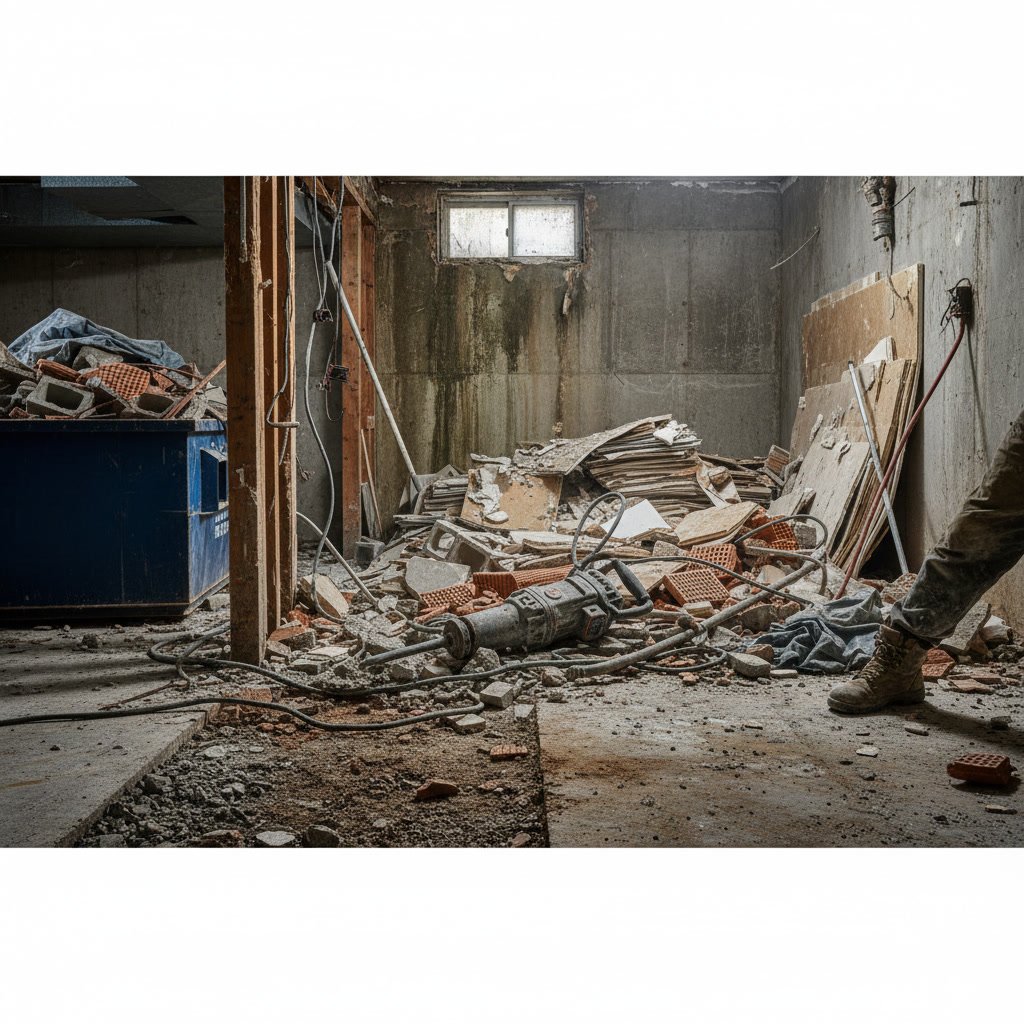

Portsmouth basements sit in a uniquely challenging environment. The Atlantic Ocean delivers constant moisture through salt air and coastal humidity, while groundwater tables run high in many neighborhoods near the water. Mold spores thrive in these exact conditions, and once they establish a foothold in your basement, they spread quickly through organic materials like wood framing, drywall, and stored belongings. Effective mold prevention Portsmouth systems address the root causes of basement moisture before visible mold colonies ever appear.
This guide explains how modern mold prevention systems work in coastal New Hampshire basements, which components protect your home most effectively, and what Portsmouth homeowners should know when choosing a solution for ocean-side conditions.
Why Portsmouth Basements Face Higher Mold Risk
The Seacoast region presents three persistent moisture challenges that inland areas avoid. Ocean humidity rarely drops below 60 percent, even on sunny days, while basements often reach 70 to 80 percent relative humidity without mechanical control. These moisture levels create ideal conditions for mold growth, which begins at humidity above 60 percent.
Groundwater pressure adds another layer of complexity. Many Portsmouth properties sit on soil with poor drainage characteristics, and spring tides can temporarily raise water tables by several feet. This hydrostatic pressure forces moisture through concrete foundation walls and floor slabs through a process called capillary action, even when no visible cracks exist.
Salt air accelerates the third problem. Airborne salt particles attract and hold moisture molecules, increasing the effective humidity level inside your basement. The same coastal air that makes summer evenings pleasant on your deck deposits moisture-laden salt throughout your foundation walls and stored items below grade.
Core Components of Effective Mold Prevention Systems
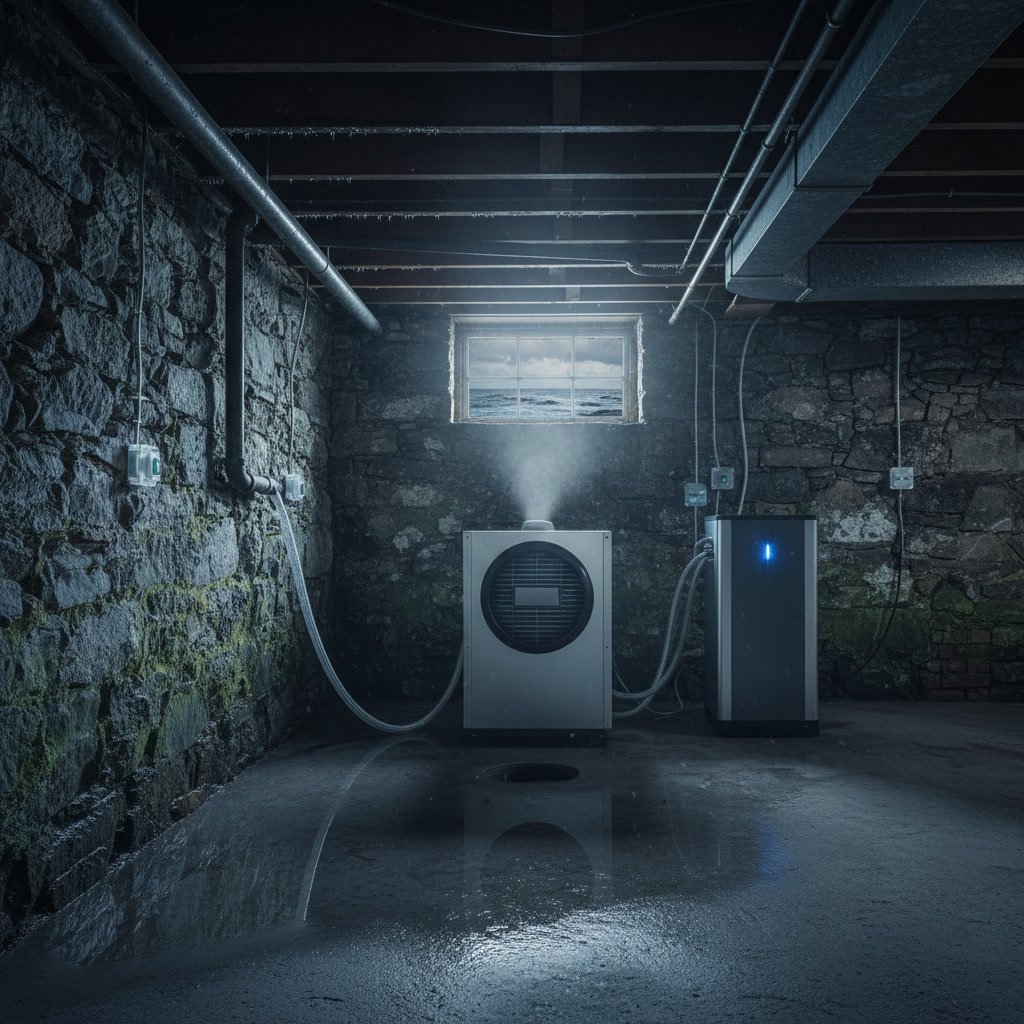
Professional mold prevention Portsmouth systems combine multiple technologies that work together to control basement moisture. No single component solves the problem alone in coastal environments. The most effective installations layer mechanical dehumidification, proper ventilation, physical moisture barriers, and drainage systems to address every moisture pathway.
Basement Dehumidification Technology
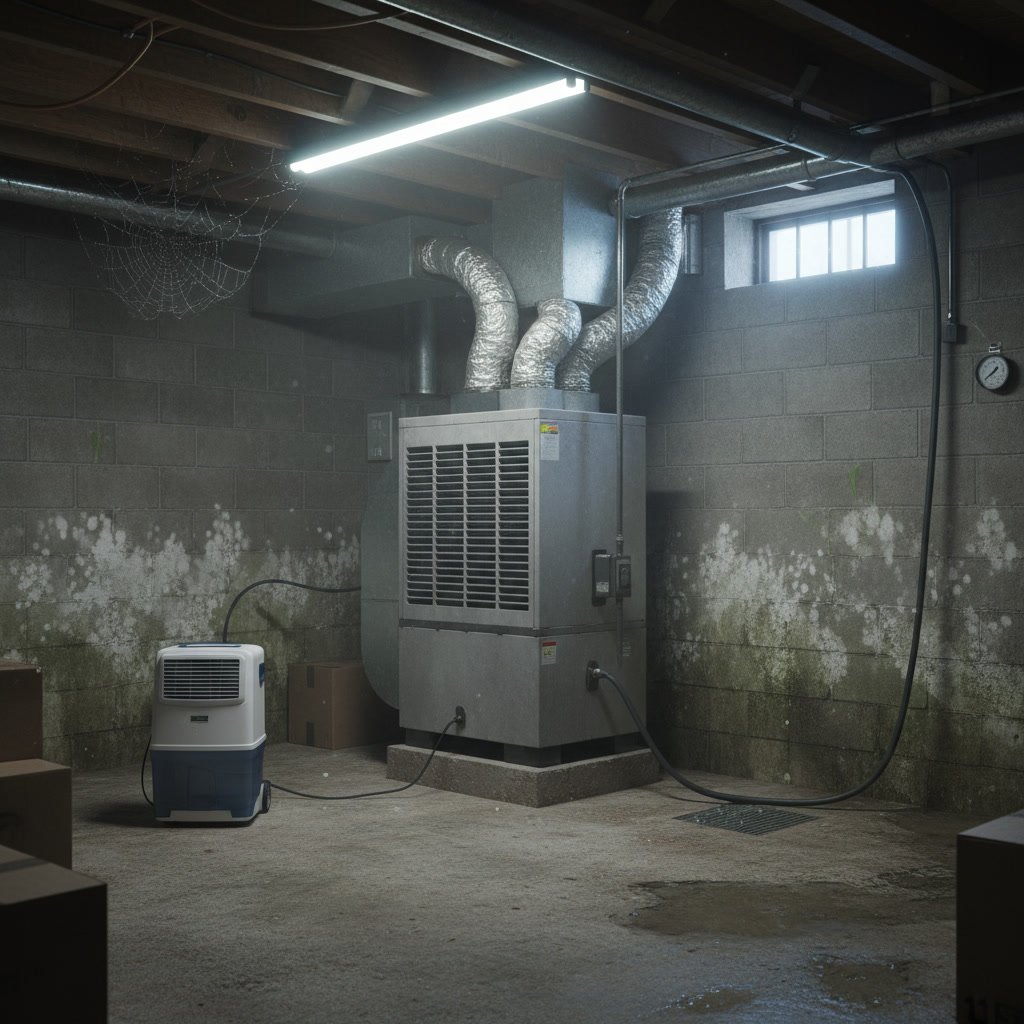
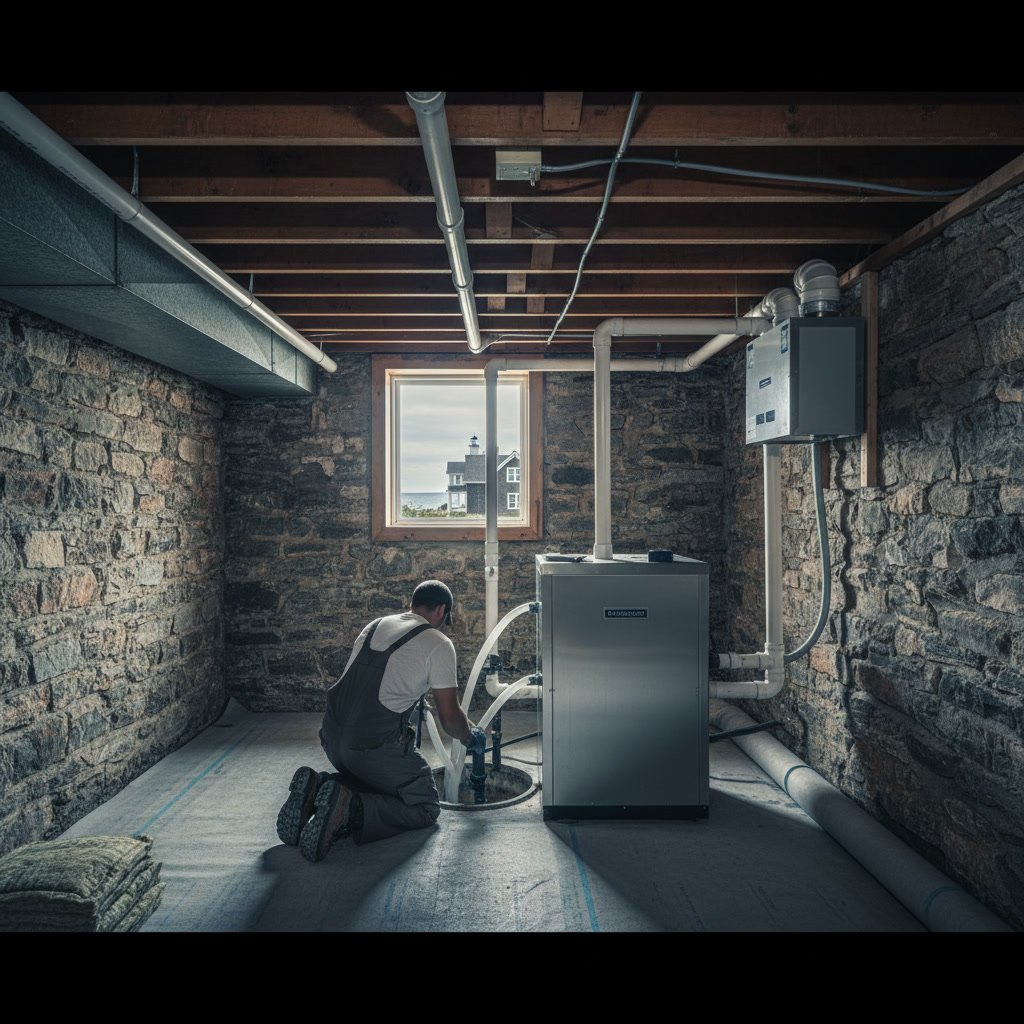
Commercial-grade basement dehumidification units form the frontline defense against airborne moisture. Unlike portable consumer units rated for 30 to 50 pints per day, professional systems remove 90 to 135 pints daily and maintain precise humidity targets between 45 and 55 percent.
These units install permanently, drain automatically into existing sump systems or floor drains, and operate continuously without manual intervention. Most include humidistats that cycle the compressor only when humidity rises above your target threshold, reducing electricity costs while maintaining protection year-round.
Ventilation Systems for Air Exchange
Proper ventilation systems prevent stagnant air pockets where moisture concentrates. Coastal basements need controlled air exchange that removes humid air without drawing in additional ocean moisture during high-humidity periods.
Modern systems use energy recovery ventilators that pre-condition incoming air, extracting moisture before it enters your basement space. Strategically placed exhaust points pull air from corners and low areas where humidity settles, while intake vents draw from drier locations. This creates continuous air movement that prevents the still conditions mold requires.
Vapor Barrier Protection
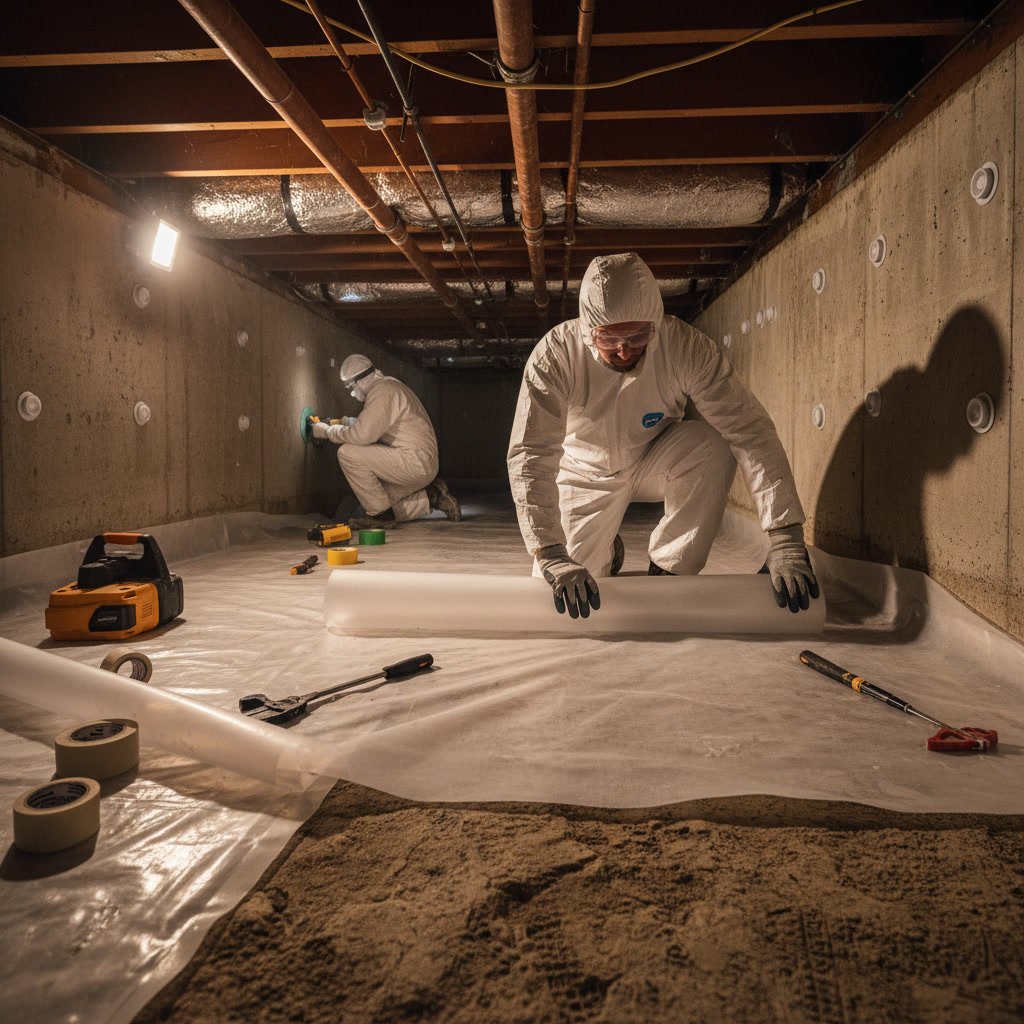
Heavy-duty vapor barrier installation blocks ground moisture before it evaporates into your basement air. Professional installations use reinforced polyethylene sheeting rated at 10 to 20 mils thickness, far heavier than hardware store options.
Barriers wrap foundation walls from floor to ceiling and seal completely across floor surfaces in crawl spaces. All seams overlap by at least 12 inches and receive specialized tape rated for long-term underground adhesion. Properly installed barriers reduce moisture transmission by 95 percent or more compared to bare concrete.
Pro Tip: Vapor barriers work best when combined with active dehumidification. The barrier stops moisture migration through concrete, while the dehumidifier removes airborne humidity that enters through other pathways like door openings or foundation cracks.
Drainage Systems That Support Mold Prevention
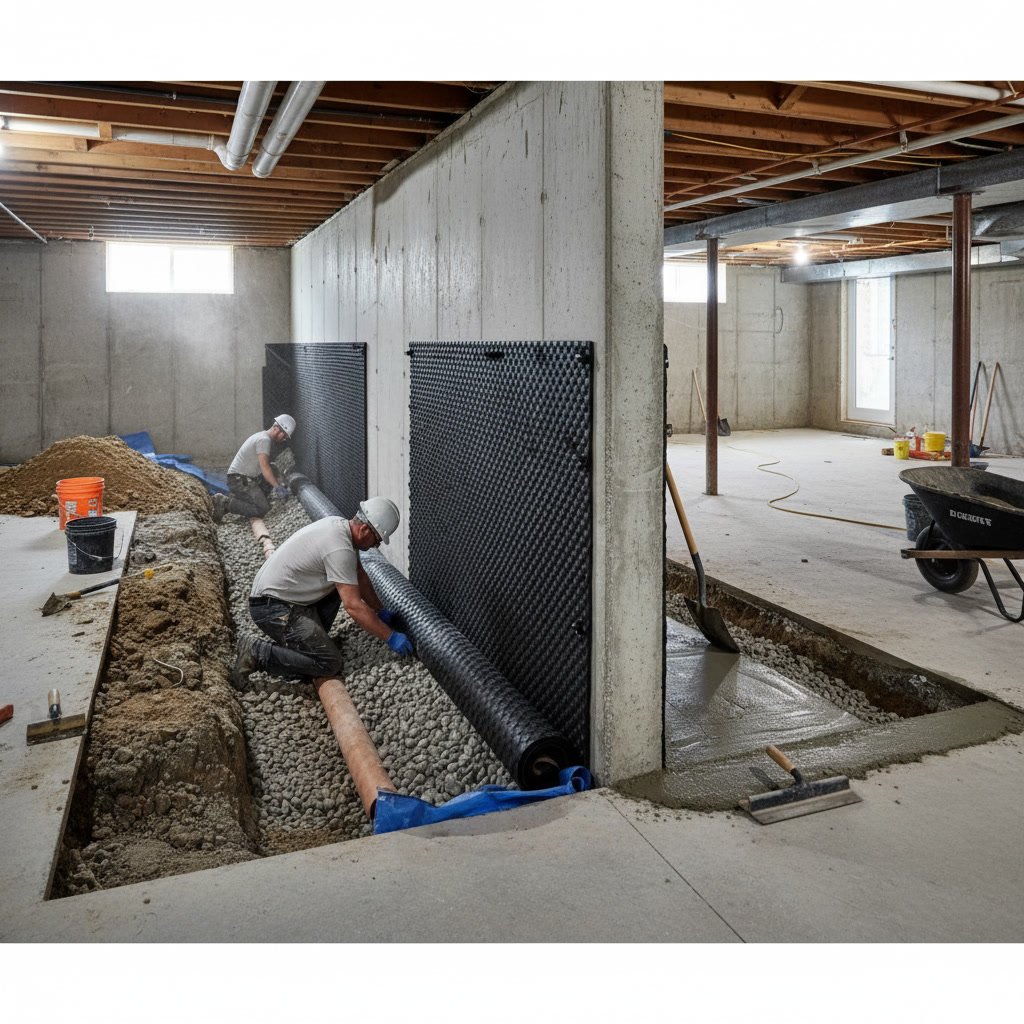
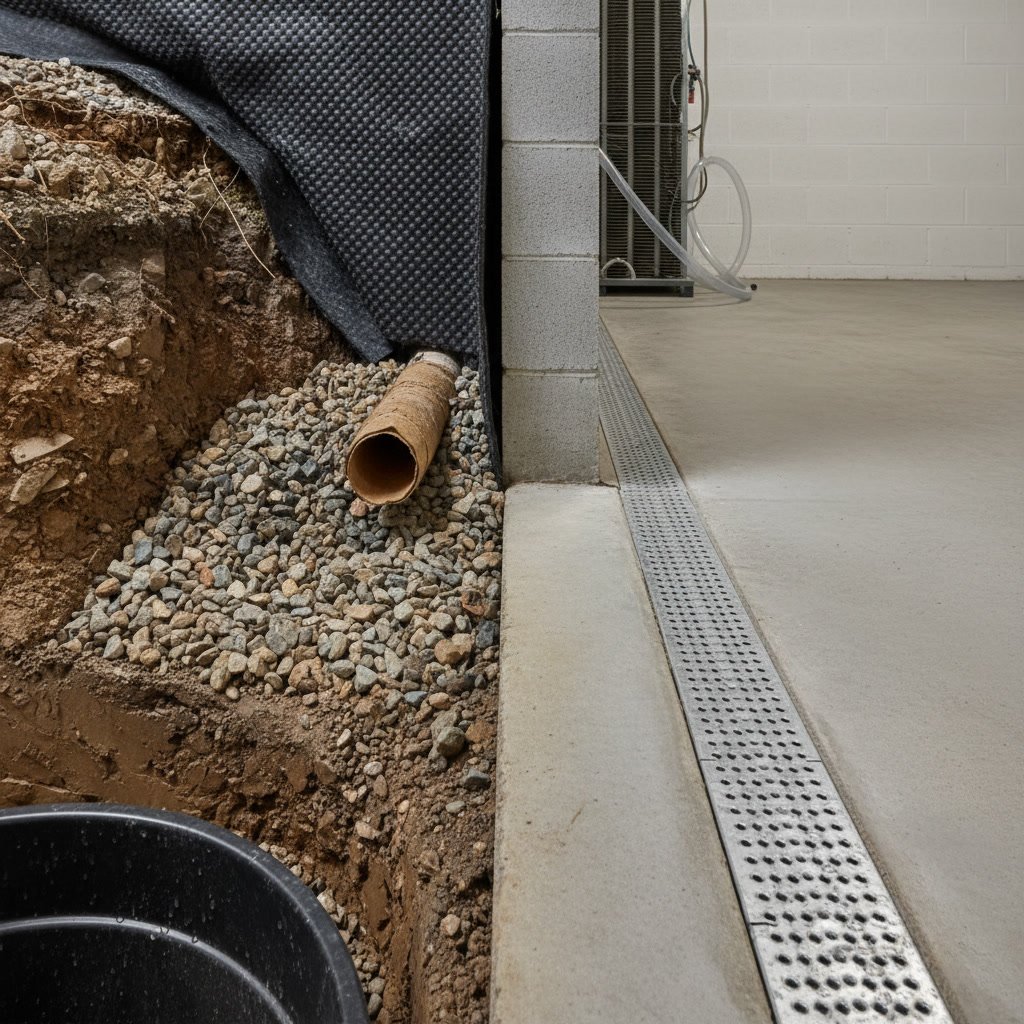
Even the best dehumidifiers cannot handle bulk water from foundation leaks or hydrostatic pressure. Comprehensive mold prevention Portsmouth strategies include perimeter drainage systems that intercept groundwater before it enters living spaces.
Interior perimeter drains install along the foundation footer, collecting water that seeps through walls or rises through floor joints. These systems channel water to sump basins where pumps discharge it safely away from your foundation. The drainage removes bulk moisture, while dehumidifiers and barriers handle residual humidity.
Many Portsmouth homes near tidal areas benefit from dual sump pump systems with battery backups that maintain protection during power outages from coastal storms. Spring tides and nor’easters often coincide with power failures, exactly when groundwater pressure peaks and basement flooding risk runs highest.
How These Systems Prevent Mold Growth
Mold requires three conditions to grow: organic food sources, temperatures between 40 and 100 degrees Fahrenheit, and moisture. Since basements always contain organic materials like wood and paper, and temperature control alone cannot prevent mold in occupied homes, moisture reduction becomes the only practical prevention strategy.
Professional systems attack moisture from every angle. Vapor barriers stop ground moisture transmission. Drainage systems remove bulk water. Dehumidifiers extract airborne humidity. Ventilation systems prevent stagnant air pockets. Together, these components maintain basement humidity below 60 percent, the threshold where mold spores remain dormant rather than colonizing surfaces.
The systems work passively once installed. Dehumidifiers cycle automatically based on humidity readings. Drainage systems activate only when water accumulates. Vapor barriers require no power or maintenance. This hands-off operation means your basement stays protected 24 hours daily, even when you travel or forget to monitor conditions manually.
Choosing the Right System for Ocean-Side Conditions
Not all mold prevention systems handle coastal conditions equally well. Portsmouth homeowners should prioritize components rated for high-humidity environments and salt air exposure. Standard equipment designed for inland New Hampshire locations like Concord, NH may underperform near the ocean.
Dehumidifier capacity matters significantly. A 1,200 square foot basement in Portsmouth typically needs a 90 to 110 pint unit minimum, while the same space in Manchester, NH might function adequately with a 70-pint model. Coastal humidity loads run 30 to 40 percent higher than inland areas during summer months.
Material selection affects longevity. Sump pump components with corrosion-resistant construction last longer in salt air environments. Vapor barriers need UV resistance if any natural light reaches crawl spaces, since coastal sunshine intensity degrades standard polyethylene faster. Ventilation fans should include sealed motors that resist moisture infiltration better than open-frame designs.
Key Takeaway: Portsmouth basement systems need approximately 25 percent more dehumidification capacity than identical inland installations due to persistent ocean humidity and higher groundwater tables near the coast.
Installation Considerations for Portsmouth Homes
Professional installation ensures systems perform as designed. Dehumidifier placement matters more than most homeowners realize. Units need adequate clearance for air intake and discharge, typically 12 inches on all sides, and should position centrally rather than in corners where they cannot circulate air effectively throughout the space.
Drainage systems require careful grading to ensure gravity flow toward sump locations. Even slight reverse slopes create standing water in drain lines, reducing system capacity and potentially allowing backup during heavy inflow periods. Professional installations include laser-guided grading that maintains consistent slope across the entire perimeter.
Vapor barriers demand meticulous sealing. Every penetration for pipes, posts, or electrical conduits needs individual attention with specialized sealants and boots that maintain moisture blocking despite building movement and temperature changes. Gaps as small as one inch can allow significant moisture transmission that undermines the entire barrier’s effectiveness.
The relationship between waterproofing and mold prevention runs both directions. While waterproofing protects Seacoast homes from moisture, mold prevention systems provide the ongoing humidity control that waterproofing alone cannot achieve.
Maintenance Requirements for Long-Term Performance
Professional-grade systems require minimal but essential maintenance to sustain protection year after year. Dehumidifiers need filter cleaning every 30 to 60 days, a five-minute task that maintains airflow efficiency. Annual coil cleaning removes salt residue that accumulates faster in coastal environments than inland locations.
Sump pumps benefit from quarterly testing to verify proper float operation and discharge flow. Battery backup systems need annual battery replacement regardless of whether they activated during the year, since lead-acid batteries lose capacity over time even without use.
Vapor barriers require periodic inspection for damage from stored items, pest activity, or foundation settlement. Most quality installations last 20 years or more without replacement, but isolated repairs prevent small compromises from expanding into larger failures.
Ventilation systems need annual filter changes and motor lubrication on models without sealed bearings. Intake and exhaust vents should receive cleaning to remove salt buildup and debris that restricts airflow.
Cost Considerations and Return on Investment
Comprehensive mold prevention Portsmouth systems typically range from $3,500 to $8,500 depending on basement size, existing conditions, and component selection. Dehumidifiers alone run $1,800 to $2,800 installed. Vapor barrier systems cost $1,500 to $3,000 for average basements. Drainage and sump installations add $2,500 to $5,000 when needed.
These investments protect against far larger expenses. Mold remediation averages $2,000 to $6,000 for established colonies, with some extensive cases exceeding $15,000 when structural materials require replacement. Health impacts from mold exposure create additional costs through medical treatment and temporary housing during remediation.
Property value protection represents another return. Visible mold or moisture problems reduce home values by 10 to 25 percent in real estate transactions, and many buyers walk away entirely when inspections reveal basement moisture issues. Prevention systems increase buyer confidence and often allow premium pricing compared to homes with documented moisture history.
Similar investments make sense for homeowners throughout the Seacoast, from Rye, NH oceanfront properties to inland communities like Lee, NH where groundwater tables still run high.
Frequently Asked Questions
How quickly do mold prevention systems reduce basement humidity?
Properly sized dehumidifiers typically bring basement humidity from 75 percent down to target levels of 50 percent within 48 to 72 hours of activation. Ongoing maintenance of these levels happens continuously once the initial reduction completes. Vapor barriers and drainage systems provide immediate moisture blocking but their full impact becomes apparent over weeks as residual moisture evaporates.
Can I install mold prevention systems myself to save money?
Dehumidifier placement and drainage setup require professional assessment to ensure proper capacity and coverage. Vapor barriers demand specialized sealing techniques that impact long-term performance dramatically. Most homeowners save money over the system’s lifetime through professional installation that prevents common errors like undersized equipment, improper drainage slopes, or vapor barrier gaps that compromise effectiveness.
Do these systems work in both basements and crawl spaces?
The same principles apply to both spaces, though component selection differs. Crawl spaces typically use encapsulation with full vapor barrier coverage and dedicated crawl space dehumidifiers designed for tighter spaces. Basements often combine partial vapor barrier application on walls with larger-capacity dehumidifiers. Both spaces benefit from drainage systems and proper ventilation control.
What happens to mold prevention systems during power outages?
Dehumidifiers and ventilation fans stop operating without power, but vapor barriers and drainage systems continue providing passive protection. Battery backup sump pumps maintain drainage for 8 to 24 hours depending on inflow rate and battery capacity. Humidity rises gradually during outages, but basements typically remain below mold-growth thresholds for several days before problems develop.
How do I know if my existing system is working properly?
Basement humidity should remain between 45 and 55 percent year-round with a functioning system. Inexpensive hygrometers provide accurate readings. Musty odors, condensation on cold surfaces, or visible moisture spots indicate system inadequacy or malfunction. Annual professional inspections verify all components operate at design capacity and identify maintenance needs before failures occur.
Protecting Your Portsmouth Home from Coastal Moisture
Effective mold prevention Portsmouth systems combine dehumidification, vapor barriers, drainage, and ventilation to address the unique challenges ocean-side basements face. These integrated approaches control humidity below mold-growth thresholds while removing bulk water before it accumulates. Professional installation ensures proper sizing and installation quality that determines long-term performance.
NH Dry Basement LLC helps Portsmouth homeowners design and install comprehensive moisture control systems tailored to coastal conditions. Our family-owned business understands Seacoast challenges from years of experience protecting homes throughout the region. If your basement shows signs of excess moisture or you want to prevent mold before it starts, contact us at +16032359598 to schedule an assessment. We serve Portsmouth, NH and surrounding Seacoast communities with honest recommendations and proven solutions that keep basements dry year-round.