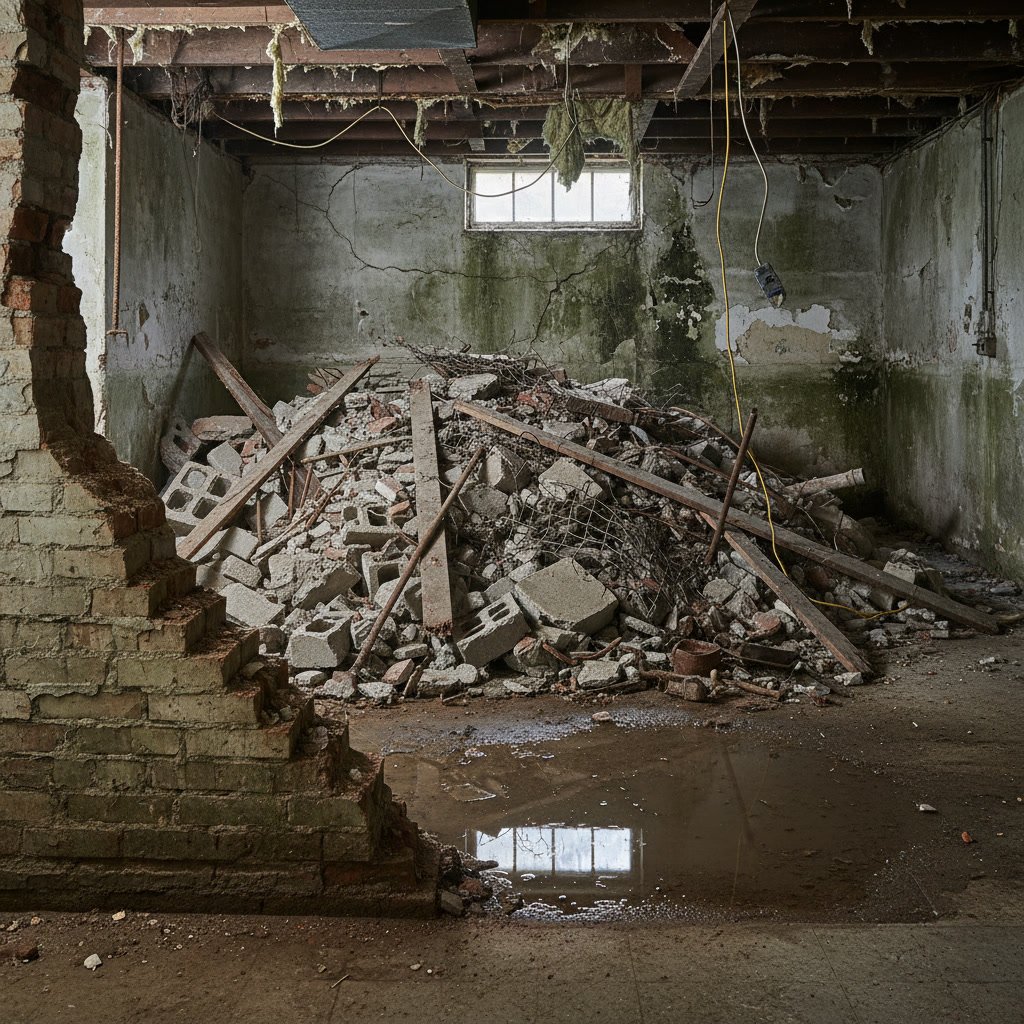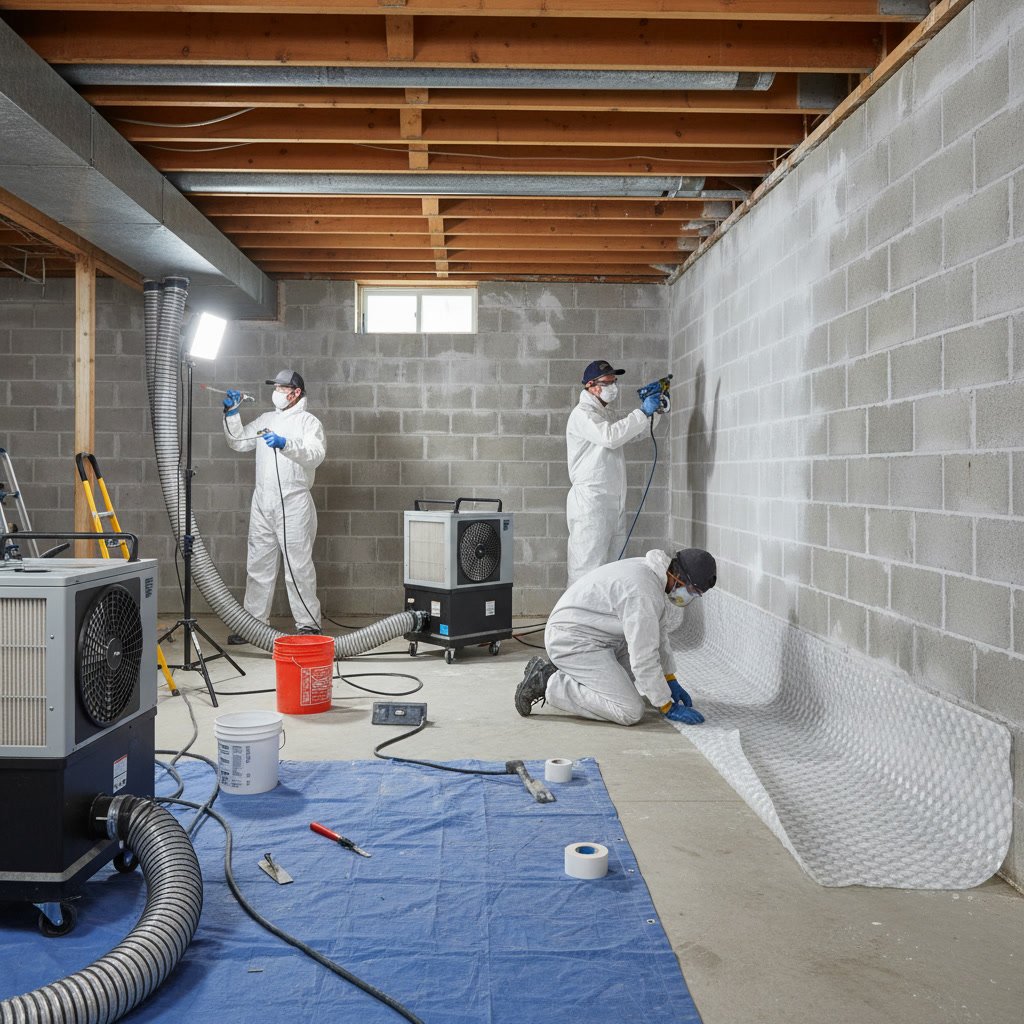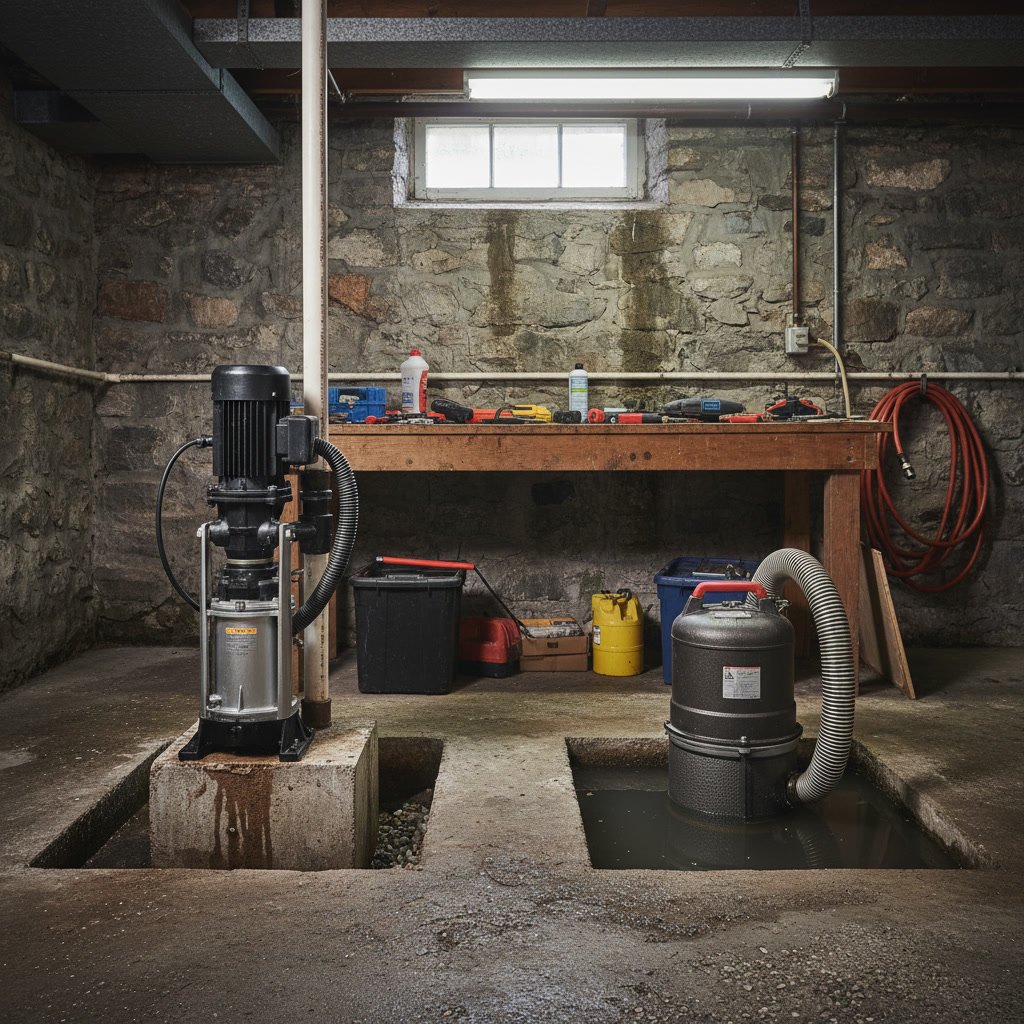
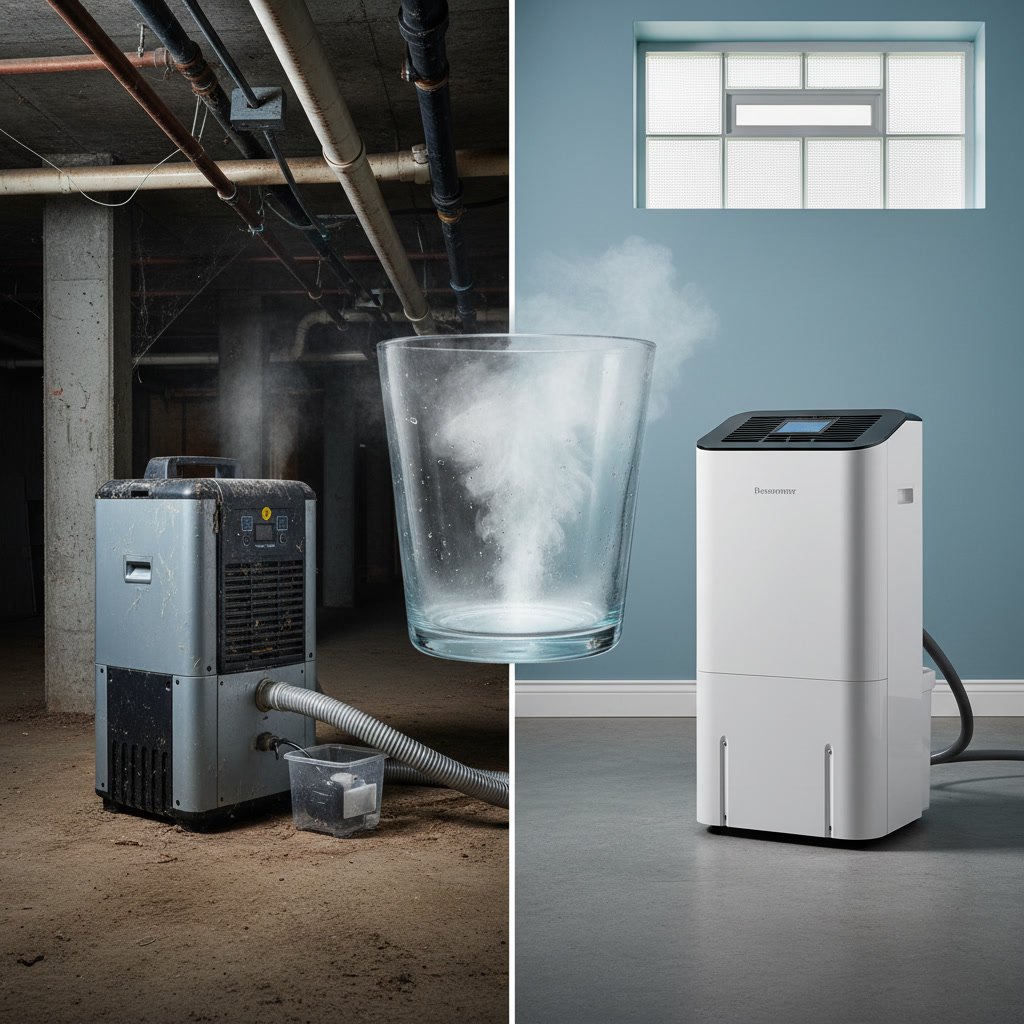
A crawl space dehumidifier operates in a confined, low-temperature environment and requires equipment rated for 55°F or cooler temperatures, while standard basement dehumidifiers work best in heated spaces above 60°F. Crawl spaces need units that drain continuously without a collection bucket and resist mold growth on the equipment itself. Basement units focus on removing moisture from livable spaces with higher air volumes and typically include features for comfort rather than extreme moisture control.
Why Below-Grade Spaces Create Different Moisture Challenges
Below-grade spaces collect moisture from three sources: groundwater seepage through foundation walls, condensation from temperature differences, and humidity rising from the earth itself. Each space responds differently to these moisture sources based on insulation, ventilation, and contact with soil.
Basements typically feature concrete floors that create a barrier between living spaces and ground moisture. Crawl spaces often have exposed dirt or minimal vapor barriers, allowing continuous moisture transmission from soil into the air. This fundamental difference changes how much moisture each dehumidifier must remove daily.
Temperature stability affects equipment performance significantly. Basements maintain relatively consistent temperatures year-round, especially in homes with heating systems. Crawl spaces fluctuate with outdoor conditions and regularly drop below 60°F during New Hampshire winters, causing standard dehumidifiers to ice up and fail.
How Standard Basement Units Handle Moisture Removal
Basement dehumidifiers pull warm, humid air across refrigerated coils that condense water vapor into liquid. The dried air returns to the space while collected water drains into a bucket or pump. Most residential units remove 30 to 70 pints of water per day, depending on capacity.
These systems work efficiently when ambient temperatures stay above 65°F. The refrigeration cycle depends on adequate heat energy in the air to support the condensation process. Performance drops sharply below 60°F, and many units shut down automatically to prevent coil freezing.
Standard units focus on comfort and energy efficiency. They include humidistats that cycle the compressor on and off to maintain target humidity levels, typically 50 to 60 percent relative humidity. This works well for finished basements used as living areas but falls short for moisture control in unfinished spaces.
What Makes Crawl Space Equipment Different
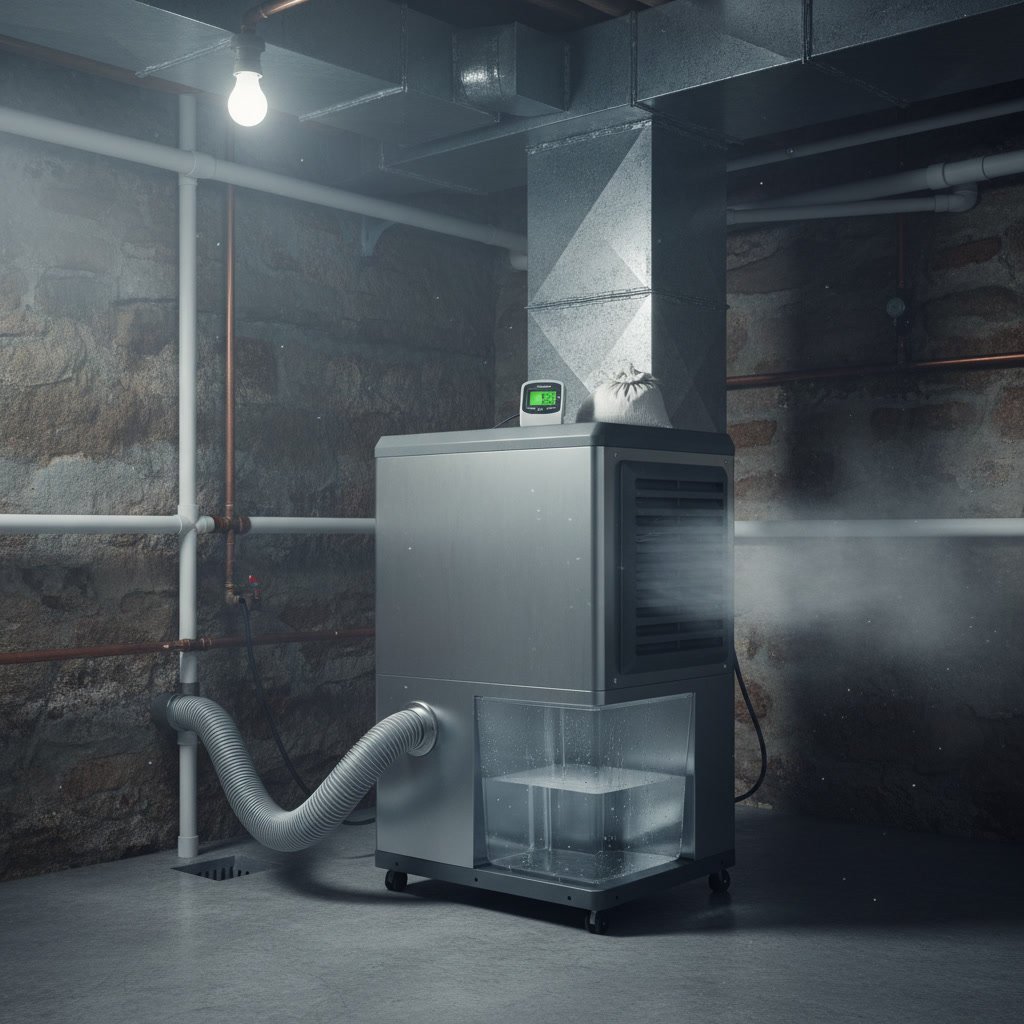
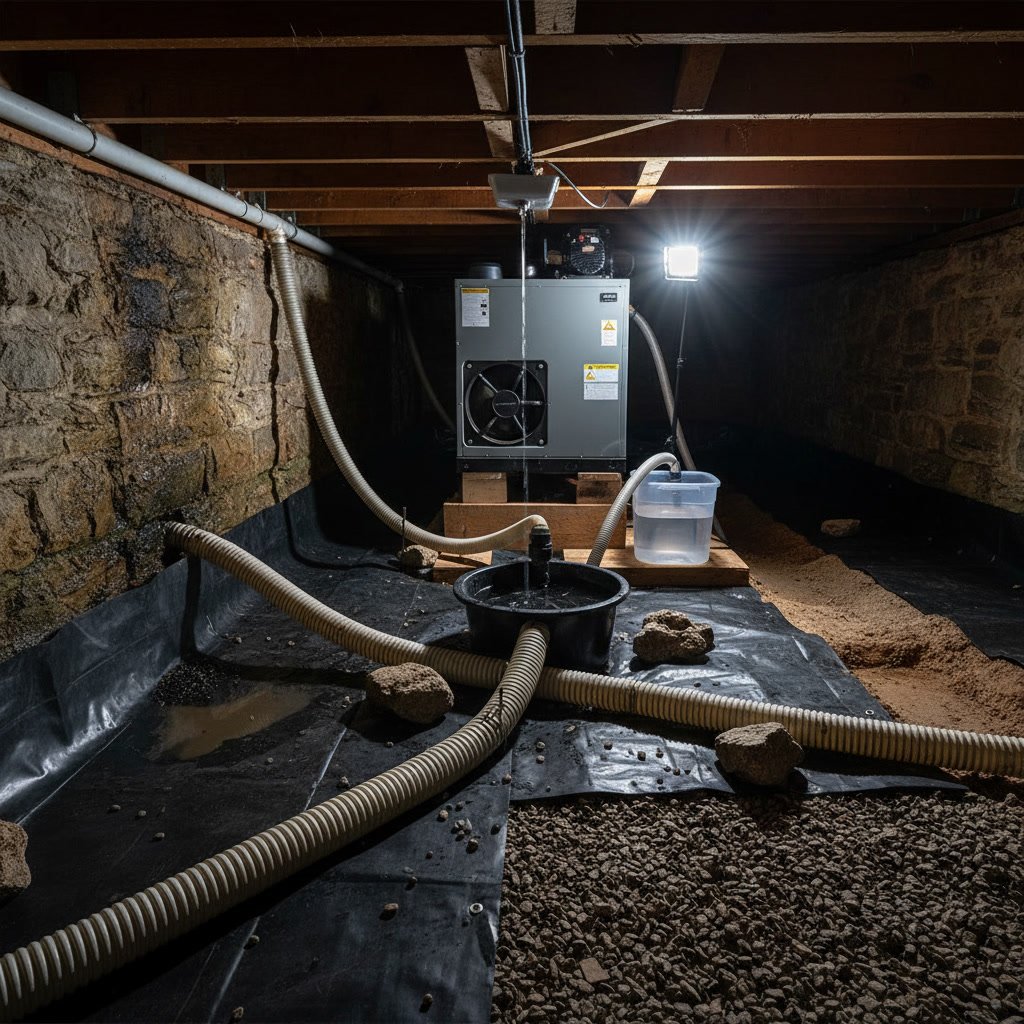
Dedicated crawl space units feature auto-restart after power outages, critical for spaces that homeowners rarely check. They include low-temperature operation down to 55°F or lower, allowing year-round moisture control. Heavy-duty construction resists corrosion from constant high humidity exposure.
These dehumidifiers drain continuously without collection buckets. Gravity drains or condensate pumps move water away from the space immediately, preventing standing water that attracts pests and promotes mold. Many models mount on walls to save floor space in cramped areas.
Energy consumption differs significantly. Crawl space models run continuously or nearly so, designed for sustained operation rather than intermittent cycling. They prioritize moisture removal capacity over energy efficiency, recognizing that preventing structural damage costs less than the electricity to run the unit.
Temperature Thresholds That Determine Equipment Choice
Equipment selection hinges on the coldest temperature your space reaches during winter months. If your basement stays above 65°F year-round due to heating system proximity, a standard unit works adequately. Temperatures between 60°F and 65°F require careful monitoring, as performance degrades in this range.
Spaces that drop below 60°F demand low-temperature rated equipment. Crawl spaces in More Dover regularly fall into this category during October through April. Standard dehumidifiers ice over in these conditions, rendering them useless exactly when moisture control matters most.
One often-overlooked factor is that air temperature and surface temperature differ. Your basement air might read 62°F while foundation walls sit at 54°F. Condensation forms on cold surfaces regardless of air temperature, and equipment must handle both moisture sources effectively.
Drainage Requirements and Water Volume Capacity
Crawl spaces in New Hampshire clay soils can release 10 to 15 gallons of moisture per day during spring thaw and heavy rain periods. Standard 30-pint units collecting water in buckets require emptying two to three times daily, an impractical maintenance burden for spaces accessed infrequently.
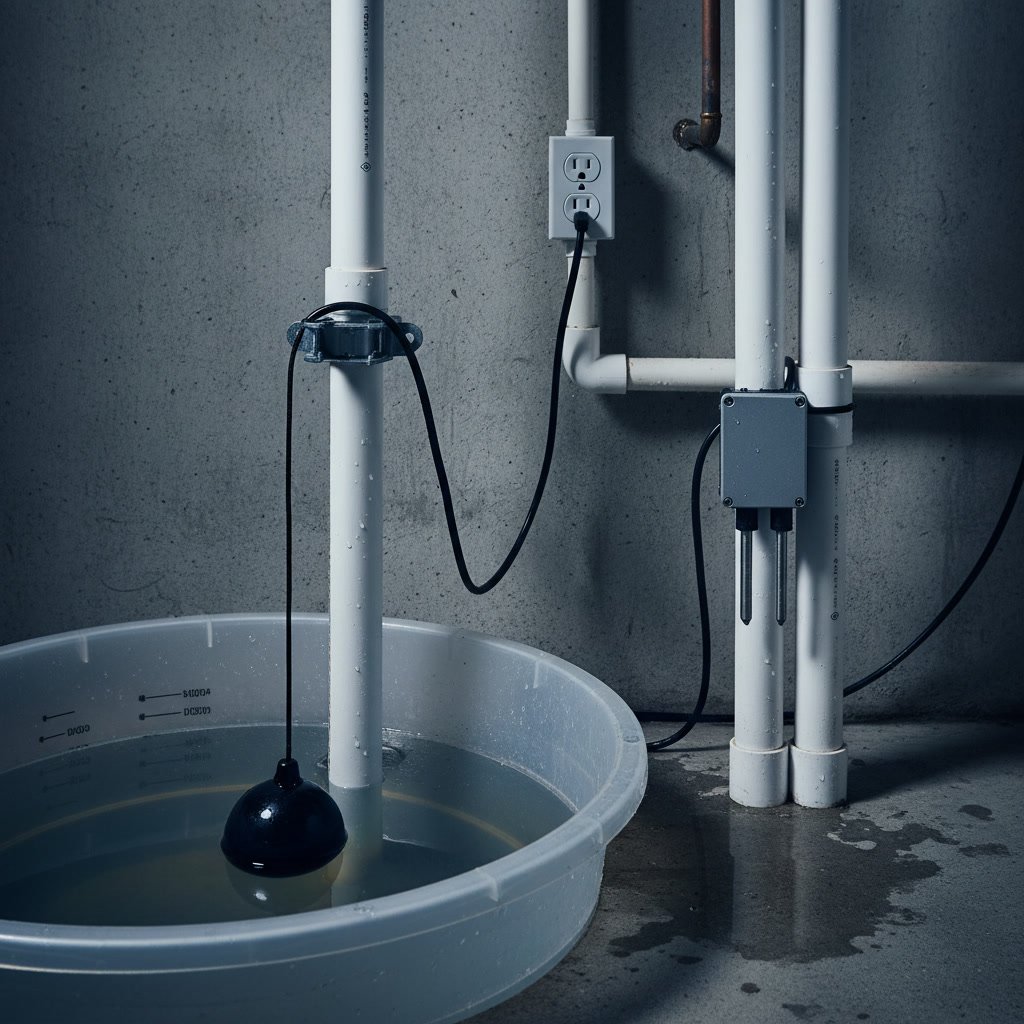
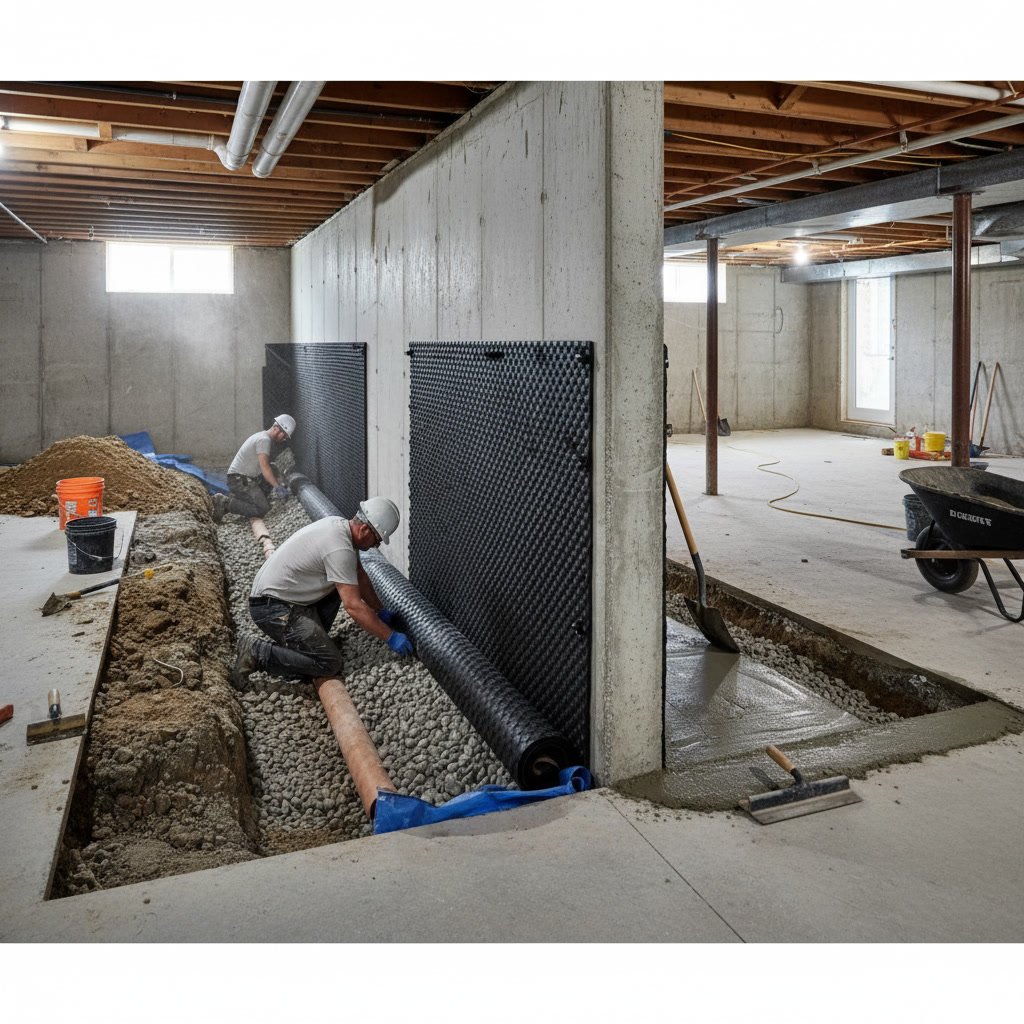
Continuous drainage eliminates this problem. Units connect to existing drainage systems or discharge pumps that route water to sump basins or exterior drain points. This integration ensures moisture leaves your property rather than cycling through collection and manual disposal.
The relationship between dehumidification and proper drainage cannot be overstated. A dehumidifier removes airborne moisture, but groundwater requires physical drainage channels. Combining both systems provides complete moisture management, addressing water in all its forms.
Sizing Calculations Based on Space Volume and Moisture Load
Basement sizing follows standard calculations: measure square footage, multiply by ceiling height for cubic feet, then match capacity to space volume. A 1,000 square foot basement with eight-foot ceilings requires a 50-pint unit for moderate moisture or 70 pints for heavy dampness.
Crawl space calculations add complexity. Beyond volume, you factor in soil exposure, vapor barrier quality, ventilation status, and groundwater intrusion. A 600 square foot crawl space with a poor vapor barrier may need more capacity than a 1,200 square foot basement with good moisture control.
Professional assessment accounts for moisture sources that simple calculations miss. NH Dry Basement LLC evaluates foundation condition, soil type, grading, and existing water intrusion before recommending equipment. An undersized unit runs continuously without achieving target humidity, while an oversized unit cycles too frequently and wears out prematurely.
Real Performance Data from More Dover Installations
Field data from local installations reveals actual performance differences. Standard basement dehumidifiers in heated spaces maintain 50 to 55 percent relative humidity while running six to eight hours daily during summer months. Winter operation drops to two to four hours as heating systems dry indoor air naturally.
Crawl space units in unheated areas run 18 to 22 hours daily during spring and fall shoulder seasons when temperature fluctuations drive condensation. Summer operation moderates to 12 to 16 hours as temperatures stabilize. Even in winter, these units cycle on for eight to 12 hours daily, removing moisture that standard equipment cannot handle at those temperatures.
Humidity readings tell the complete story. Basements typically stabilize at 50 to 60 percent relative humidity with appropriate equipment. Crawl spaces without dedicated dehumidifiers often measure 75 to 85 percent humidity, creating ideal conditions for mold, wood rot, and pest activity. Proper equipment brings readings down to 55 percent or below, protecting structural components.
Integration with Existing Moisture Control Systems
Dehumidifiers work best as part of comprehensive moisture management. Crawl space waterproofing addresses bulk water intrusion through foundation walls and floor, while dehumidifiers handle residual humidity and condensation. Neither system replaces the other; both contribute to dry conditions.
Vapor barriers dramatically reduce the moisture load dehumidifiers must handle. A quality six-mil polyethylene barrier sealed to walls and overlapped at seams cuts soil moisture transmission by 90 percent or more. The dehumidifier then controls the remaining moisture from air infiltration and minor seepage rather than fighting constant ground moisture.
Understanding how ventilation systems can worsen moisture problems helps homeowners make informed decisions about sealing crawl spaces versus maintaining ventilation. Modern building science favors sealed crawl spaces with controlled dehumidification over traditional ventilation approaches that introduce humid outdoor air during summer months.
Maintenance Requirements and Operating Costs
Basement units require filter cleaning every 30 days and annual coil inspection. Collection buckets need regular emptying unless connected to drains. Typical maintenance takes 15 minutes monthly for homeowners handling basic tasks. Annual electricity costs range from $250 to $400 depending on runtime and local rates.
Crawl space equipment demands less frequent attention due to continuous drainage and robust construction. Filter access in tight spaces poses the main challenge; wall-mounted units with front-facing filters simplify this task. These systems cost $400 to $600 annually to operate due to longer run times and higher capacity.
The true cost comparison includes prevented damage. Water intrusion and excess moisture cause foundation deterioration, floor joist rot, insulation damage, and mold growth that cost thousands to remediate. Equipment that properly controls moisture pays for itself by preventing these expensive repairs.
When to Choose Each System Type
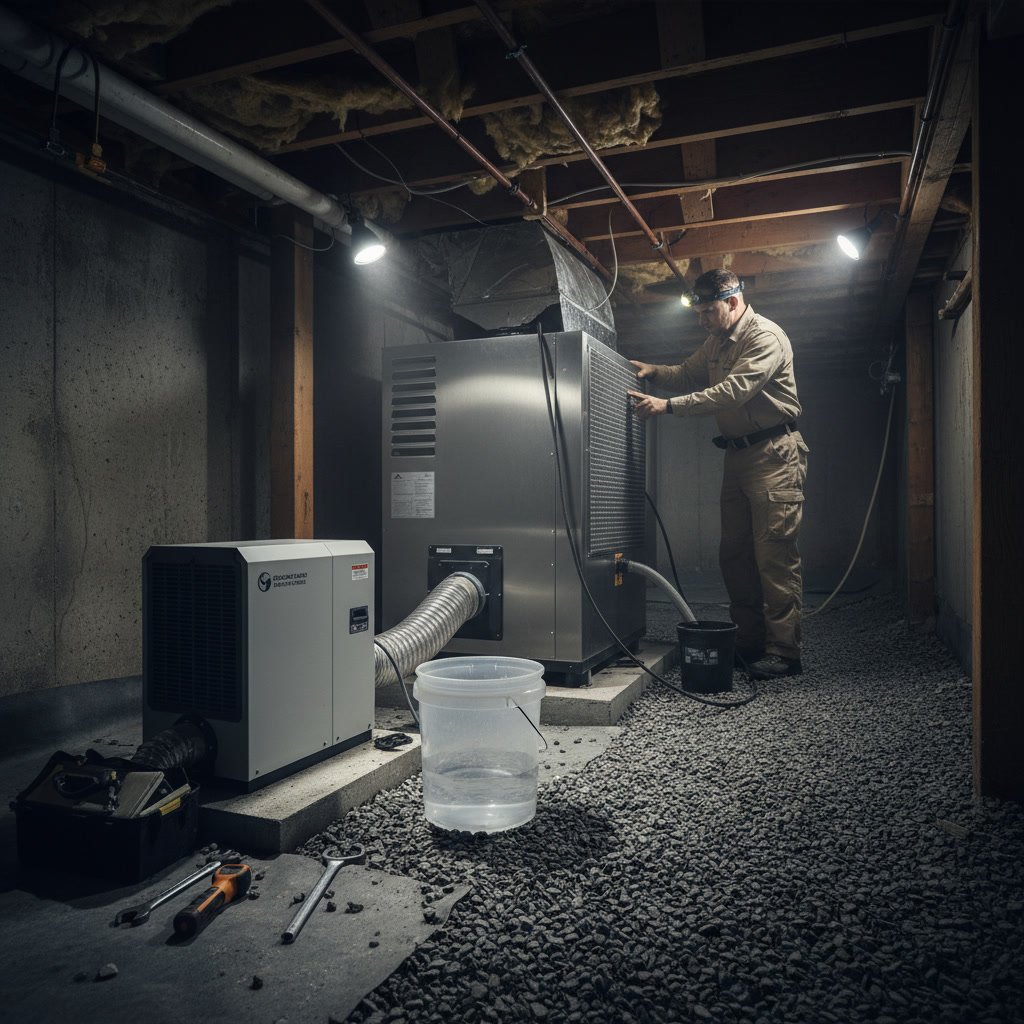
Select standard basement dehumidifiers for finished living spaces with consistent heating, temperatures above 65°F year-round, existing vapor barriers on foundation walls, and moderate moisture issues limited to summer humidity. These spaces benefit from energy-efficient models with comfort features.
Choose crawl space dehumidifiers for unheated spaces, areas that drop below 60°F seasonally, locations with exposed dirt or poor vapor barriers, spaces prone to standing water or visible condensation, and any area showing signs of mold or wood rot. These conditions demand equipment engineered for extreme moisture and temperature challenges.
Some homes need both types. A finished basement living area benefits from a standard unit optimized for comfort and energy efficiency, while the adjacent unfinished utility area or crawl space requires dedicated low-temperature equipment. Treating each space appropriately provides complete home protection.
Protecting Your Home Investment with the Right Equipment
Moisture control equipment represents preventive maintenance that protects structural integrity and indoor air quality. The right dehumidifier choice depends on space characteristics, temperature ranges, moisture sources, and integration with existing systems rather than price or brand alone.
Crawl space dehumidifiers handle extreme conditions that destroy standard equipment while providing the continuous moisture removal these challenging spaces require. Basement units excel in controlled environments where comfort and efficiency matter more than extreme capacity. Neither system substitutes for proper drainage, vapor barriers, and foundation waterproofing, but each plays a vital role in comprehensive moisture management.
NH Dry Basement LLC helps homeowners throughout the seacoast region select and install moisture control systems matched to their specific conditions. Our family-owned company understands local soil types, water tables, and seasonal challenges that affect equipment performance. Professional assessment identifies moisture sources and recommends integrated solutions that protect your home for decades. Call +16032359598 to schedule an evaluation and learn which system handles your moisture challenges most effectively.