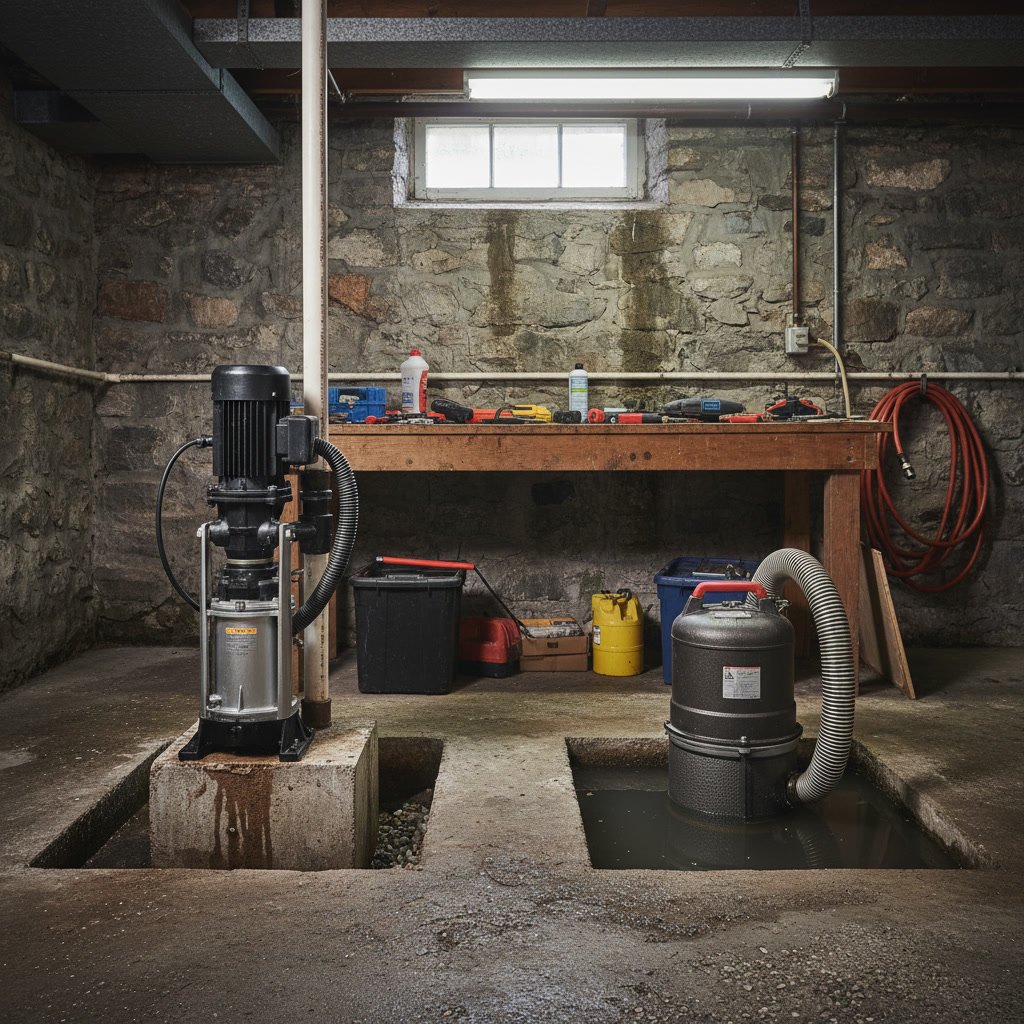
When comparing pedestal vs submersible sump pump options, submersible units typically last 7 to 10 years in New England basements, while pedestal pumps can run 25 to 30 years due to their motor placement above water. However, longevity alone doesn’t determine the best choice for your home. The answer depends on basin size, flooding frequency, noise tolerance, and your specific basement conditions.
New England’s freeze-thaw cycles, heavy spring runoff, and coastal storms create unique demands on basement waterproofing equipment. Choosing the wrong pump type can mean premature failure during the very storms when you need protection most.
Why Pump Lifespan Matters More in Coastal New Hampshire
Homes near the seacoast face higher water tables and more frequent pump cycling than inland properties. A pump that runs five times per day experiences dramatically different wear patterns than one activating twice per week. In towns like Portsmouth and Rye, pumps work harder year-round.
The motor’s exposure to moisture directly affects how long it operates reliably. Submersible units sit in water constantly, while pedestal motors remain elevated and dry. This fundamental design difference explains the lifespan gap between the two types.
Replacement costs factor into the total ownership equation. A submersible pump that needs replacement every eight years versus a pedestal lasting 25 years creates different long-term expenses, even if the initial pedestal costs slightly more.
How Pedestal Pumps Work and Where They Excel
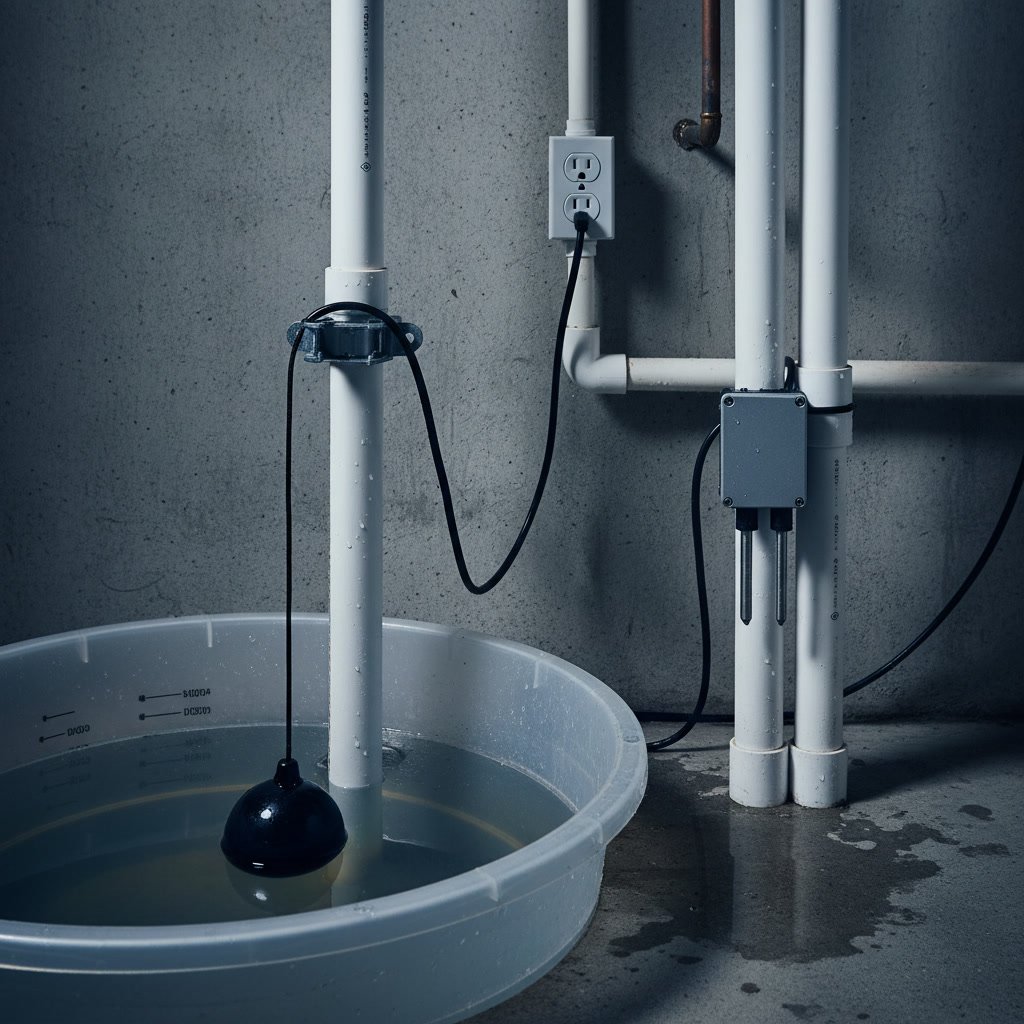
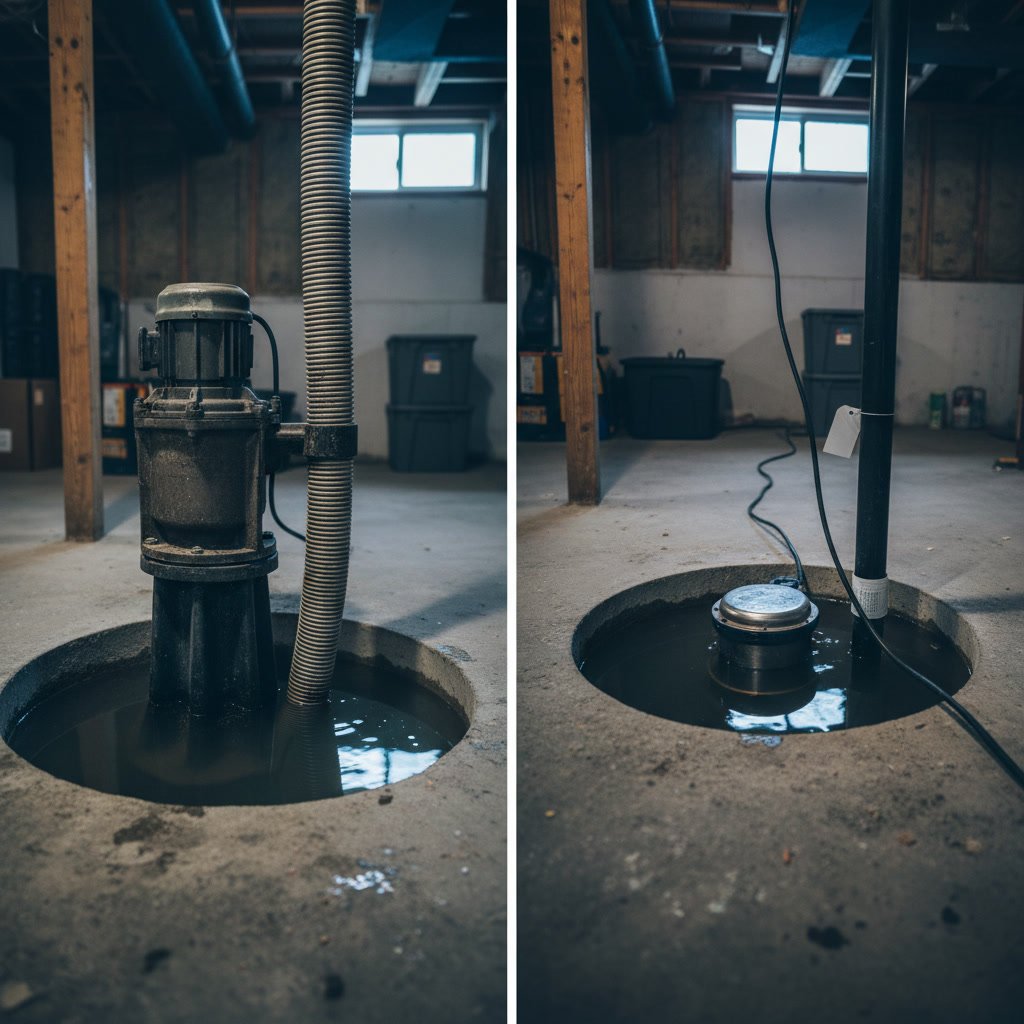
A pedestal pump positions its motor on a column above the sump basin. A shaft extends down into the water, connecting to an impeller at the bottom. The motor stays completely dry throughout operation.
This design creates several advantages. Maintenance becomes simpler because you can access all components without removing the pump from the basin. The motor runs cooler since it’s surrounded by air rather than water. Replacement parts cost less and stay available longer since these designs haven’t changed substantially in decades.
Pedestal units work best in shallow basins or cramped spaces where a submersible won’t fit. They handle standard residential drainage volumes efficiently. Many drainage systems in older New England homes were built around pedestal specifications.
The trade-off comes in noise. Because the motor sits exposed in your basement, you’ll hear it running. For homes with finished basements or living spaces near the sump area, this sound can become intrusive.
Submersible Pump Design and Performance Benefits
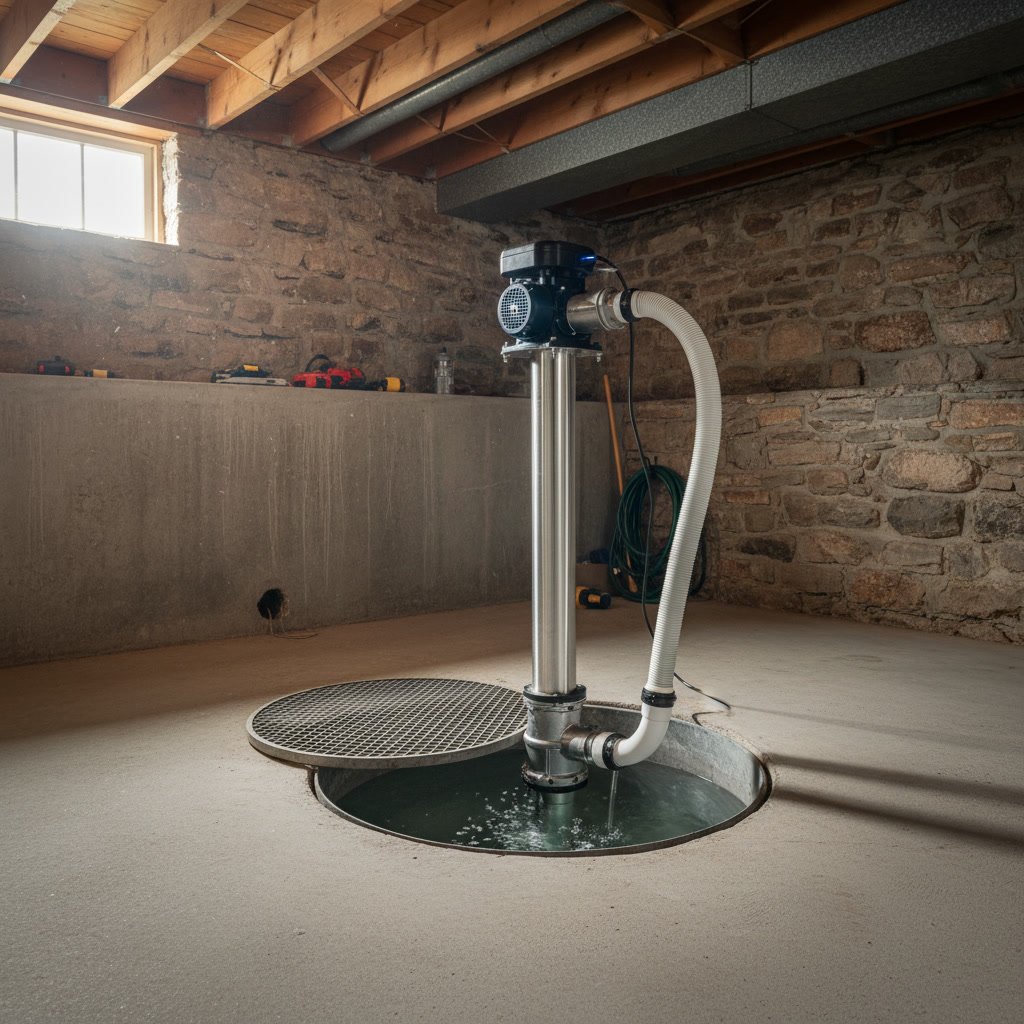
Submersible pumps place the entire unit, including the motor, inside the sump basin below water level. A sealed housing protects electrical components from moisture. These pumps sit quietly at the bottom of your basin until the float switch activates them.
The sealed design makes them nearly silent during operation. Homeowners with finished basements or bedrooms near the sump location prefer this quiet performance. The pump sits completely out of sight, covered by a basin lid.
Submersibles handle higher volumes and pump water faster than comparable pedestal models. This matters during heavy spring runoff or rapid snowmelt when water enters your basement quickly. The unit can move more gallons per minute, keeping ahead of incoming water.
Modern submersibles include advanced features like automatic float switches, thermal overload protection, and corrosion-resistant materials. These improvements have narrowed the reliability gap between the two pump types over recent years.
Comparing Durability in More Dover Conditions
In towns throughout the seacoast region, including More Dover, basement conditions influence which pump type performs better long-term. Homes with high water tables or frequent activation cycles stress submersible motors more severely.
Pedestal pumps handle continuous or frequent operation better because the motor disperses heat into surrounding air. A submersible motor transfers heat into water, which works efficiently until the pump runs constantly. Extended operation in warm water shortens motor life.
However, pedestal pumps face different vulnerabilities. The exposed motor collects dust and can corrode from basement humidity. The shaft seal, where the rotating shaft enters the water, represents a potential failure point. If this seal degrades, water enters the motor housing and destroys it.
Professional installation quality affects both types equally. A pump sitting at the wrong angle, inadequate discharge piping, or improper electrical connections will fail early regardless of design.
Installation Depth and Basin Size Constraints
Your existing sump basin dimensions may eliminate one option entirely. Standard pedestal pumps require only 11 to 14 inches of basin depth. Submersible units need 18 to 24 inches to function properly and allow adequate water volume for cooling.
Older New Hampshire homes often have shallow basins excavated before submersible pumps became standard. Converting to submersible requires basin excavation, adding cost and disruption. The existing basement waterproofing system may need modification.
Basin width matters too. Narrow basins limit submersible pump options since the unit and float mechanism need clearance. A pedestal’s compact footprint fits tighter spaces more easily.
If you’re installing a new system from scratch, you can size the basin for either pump type. This flexibility lets you choose based on performance needs rather than dimensional constraints.
Maintenance Requirements Over the Pump’s Lifetime
Pedestal pumps simplify routine maintenance. You can inspect, clean, and service the motor without removing anything from the basin. Check the shaft seal annually for wear. Clean debris from the intake screen. Test the float switch operation every few months.
Submersible maintenance requires pulling the entire unit from the basin. This isn’t difficult, but it’s messier. You’ll need to disconnect power, detach the discharge pipe, and lift out a wet pump weighing 15 to 30 pounds. Inspect the impeller for debris, check seals, and test the float switch.
Both pump types benefit from annual testing. Pour water into the basin until the pump activates, verifying it starts quickly and discharges properly. This simple check catches problems before a storm hits. Adding battery backups to either pump type provides protection during power outages common in New England winters.
Keep replacement parts on hand for pedestal pumps since the motor may outlast available parts for your specific model. For submersibles, the entire unit typically gets replaced rather than repaired when the motor fails.
Power Consumption and Operating Costs
Operating costs over 20 years add meaningful expense beyond the initial purchase price. Submersible pumps generally draw 0.5 to 1.0 horsepower. Pedestal units use 0.3 to 0.5 horsepower for equivalent pumping capacity.
The difference seems minor until you calculate cumulative runtime. A pump activating 15 minutes daily uses 91 hours annually. At New Hampshire’s average electricity rate of 22 cents per kilowatt-hour, a 0.75 hp submersible costs about 12 dollars yearly to run, versus 8 dollars for a 0.4 hp pedestal pump.
Multiply these costs across the pump’s lifespan. A submersible running eight years costs roughly 96 dollars in electricity. A pedestal running 25 years costs 200 dollars. The pedestal’s longer service life means more total energy consumption despite lower per-year costs.
These calculations assume average activation frequency. Homes with chronic water problems or those managing moisture issues related to crawl space ventilation problems may see pumps run far more often, increasing costs proportionally.
When Each Pump Type Performs Best
Choose a pedestal pump when your budget prioritizes long-term durability over upfront features. If your basement stays unfinished and noise doesn’t concern you, the pedestal’s 25-plus-year lifespan delivers excellent value. Shallow basins or tight spaces favor pedestals mechanically.
Select a submersible when you need quiet operation, higher pumping capacity, or modern features. Finished basements benefit from silent operation. Homes experiencing rapid water entry during storms need the higher gallon-per-minute capacity submersibles provide. Deep basins with adequate clearance suit these pumps perfectly.
Geographic factors influence the decision too. Properties in Manchester and Concord with moderate water tables handle either type well. Coastal homes in Portsmouth facing persistent high water tables may prefer submersible capacity despite shorter lifespans. Interior towns like Northwood and Rochester with seasonal flooding patterns often succeed with either pump type.
Consider your home’s future plans. If you’ll finish the basement or add living space near the sump location, choose a submersible now. Retrofitting later means replacing a functional pedestal pump before its natural lifespan ends.
Backup Systems and Redundancy Planning
Neither pump type matters if it fails during a power outage. New England ice storms and coastal nor’easters regularly knock out electricity when basements flood most. A battery backup system protects your home regardless of which primary pump you choose.
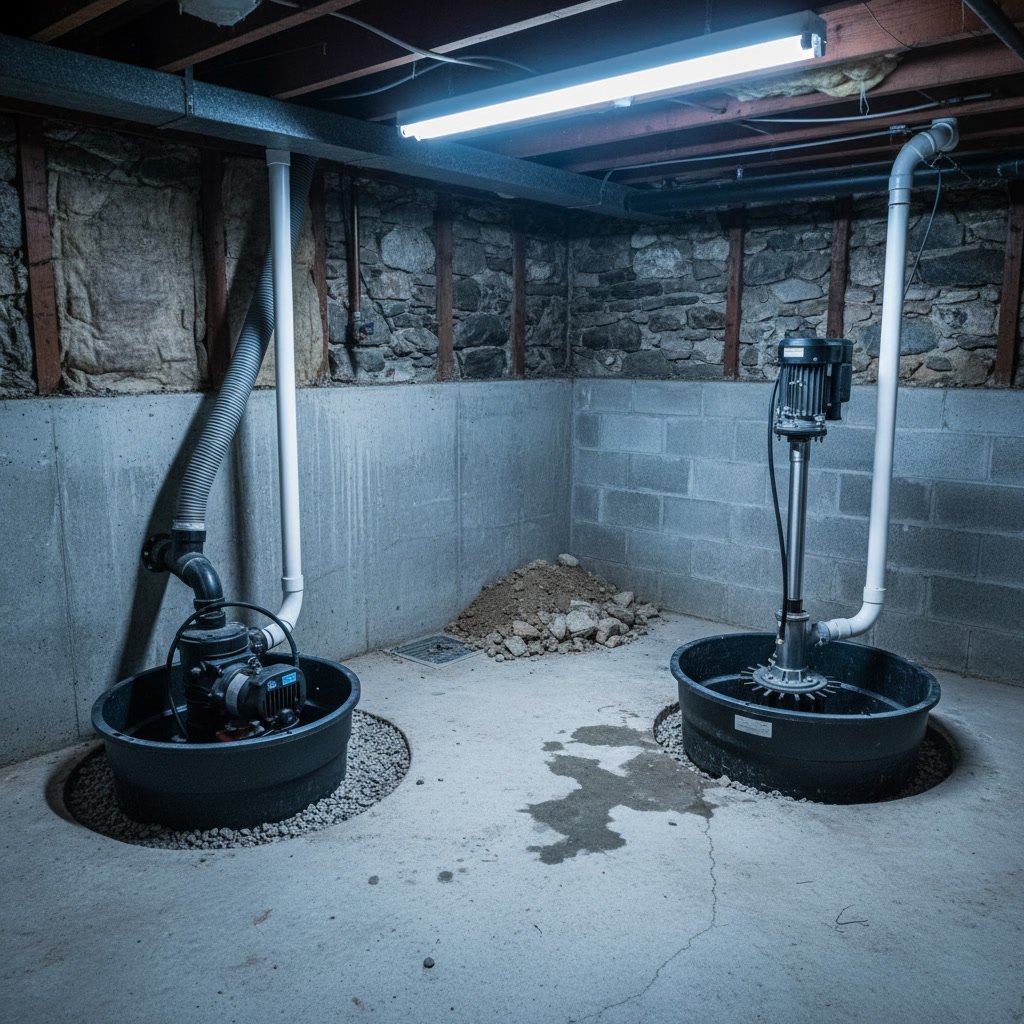
Some homeowners install both pump types in a single basin for redundancy. The submersible serves as the primary pump for quiet daily operation. The pedestal sits slightly higher as a backup, activating if water rises past the submersible’s capacity or if the primary pump fails. This dual system costs more initially but provides exceptional protection.
Water-powered backup pumps offer another option that works with either primary pump type. These units use municipal water pressure to create suction, requiring no electricity or batteries. They work well in areas with reliable water pressure but add ongoing water costs.
Understanding how battery backup sump pumps work helps you design a complete protection system rather than relying on a single point of failure.
Real-World Performance Data from Family Owned Installation Experience
After installing hundreds of both pump types across the seacoast region, certain patterns emerge clearly. Pedestal pumps in homes with moderate drainage needs regularly exceed 20 years of service. The most common failure point is the shaft seal, which typically shows wear around year 15 to 18.
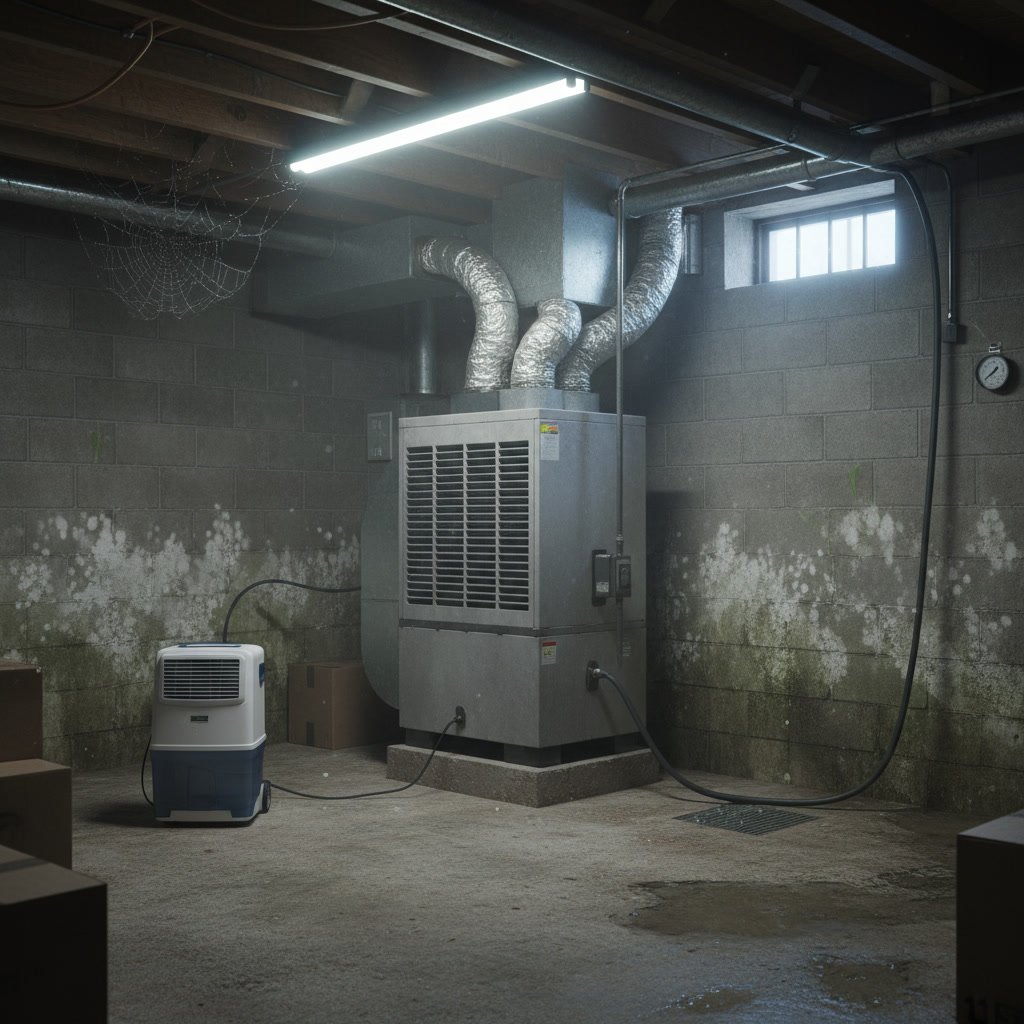
Submersible pumps in the same moderate-use environments average eight to nine years before motor failure. However, in homes where proper basement dehumidification reduces ambient moisture and the pump activates less than once daily, some submersibles reach 12 years.
The critical insight comes from high-use installations. When pumps activate multiple times per hour during wet seasons, submersibles fail in as little as four to five years. Pedestal pumps in identical conditions show stress but typically operate 12 to 15 years before replacement.
This data suggests that if your home requires frequent pumping, the pedestal’s longevity advantage grows substantially. For homes with occasional activation, the submersible’s shorter lifespan becomes more acceptable given its performance benefits.
Making the Right Choice for Your New England Basement
The longest-lasting pump is the one matched correctly to your home’s specific conditions. Pedestal pumps offer superior longevity in moderate-use applications and constrained spaces. Submersible pumps deliver better performance, quieter operation, and higher capacity despite shorter lifespans.
Evaluate your basement’s water intrusion patterns, basin dimensions, finish level, and budget priorities. Consider whether maximum lifespan or optimal performance matters more for your situation. Both pump types protect homes effectively when properly installed and maintained.
Professional assessment identifies factors you might overlook. Basin depth, discharge routing, electrical capacity, and local water table behavior all influence which pump serves you best long-term.
For over a decade, NH Dry Basement LLC has helped families throughout the seacoast region choose and install the right pump for their unique situations. As a family owned business based in Barrington, we understand that your home represents your largest investment. Whether you need a reliable pedestal pump for a modest basement or a high-capacity submersible for challenging conditions, we provide honest recommendations based on your actual needs, not what’s easiest to install. If you’re unsure which pump type suits your Lee, Concord, or Rochester home best, call +16032359598 to schedule an assessment and get straight answers from people who live and work in your community.