Power outages during heavy storms are a fact of life in New Hampshire. When the electricity goes out, your primary sump pump stops working, and that’s exactly when your basement is most vulnerable to flooding. A battery backup sump pump provides critical protection during these high-risk moments, keeping your basement dry when you need it most.
This guide explains how these backup systems work, why they’re essential for homes throughout the Granite State, and what you should know before installing one.
What Is a Battery Backup Sump Pump
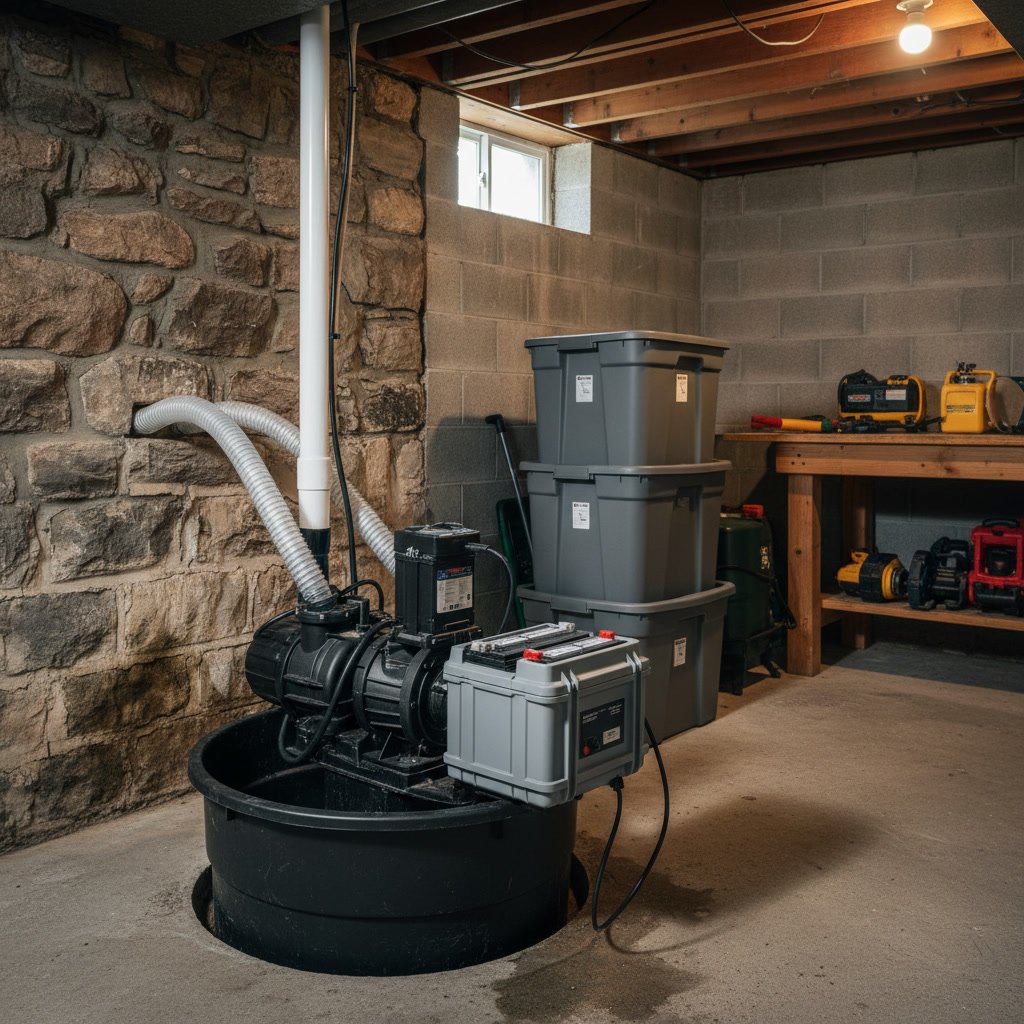
A battery backup sump pump is a secondary pump system that activates automatically when your primary pump fails or when power is lost. It operates independently from your home’s electrical system, using a marine-grade battery to power the pump.
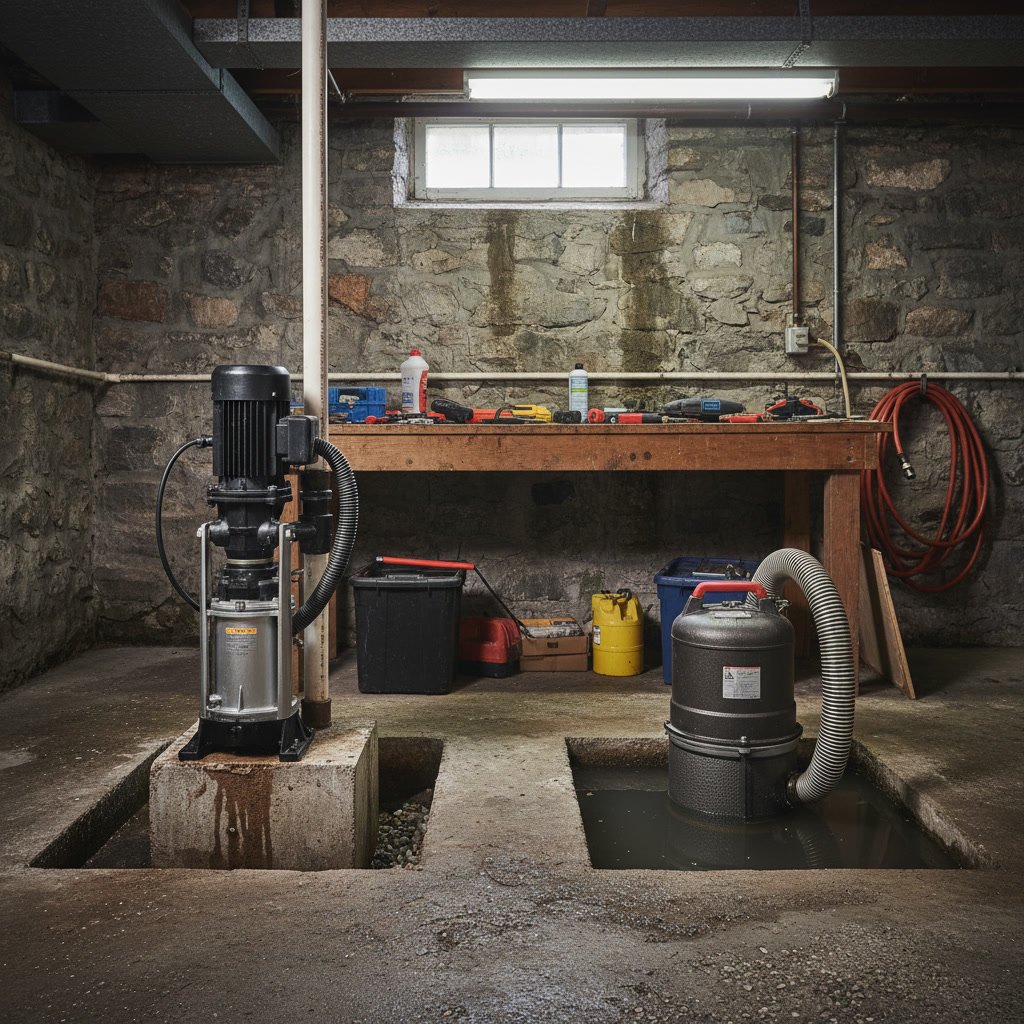
The system sits alongside your existing sump pump in the basin, ready to take over at a moment’s notice. Most units include a control panel that monitors your primary pump’s operation and switches to battery power within seconds of detecting a failure.
Unlike your primary pump that plugs into a standard outlet, the backup system charges continuously when power is available and switches to battery mode during outages. This seamless transition means you won’t wake up to a flooded basement after a storm knocks out power in the middle of the night.
How Battery Backup Systems Operate
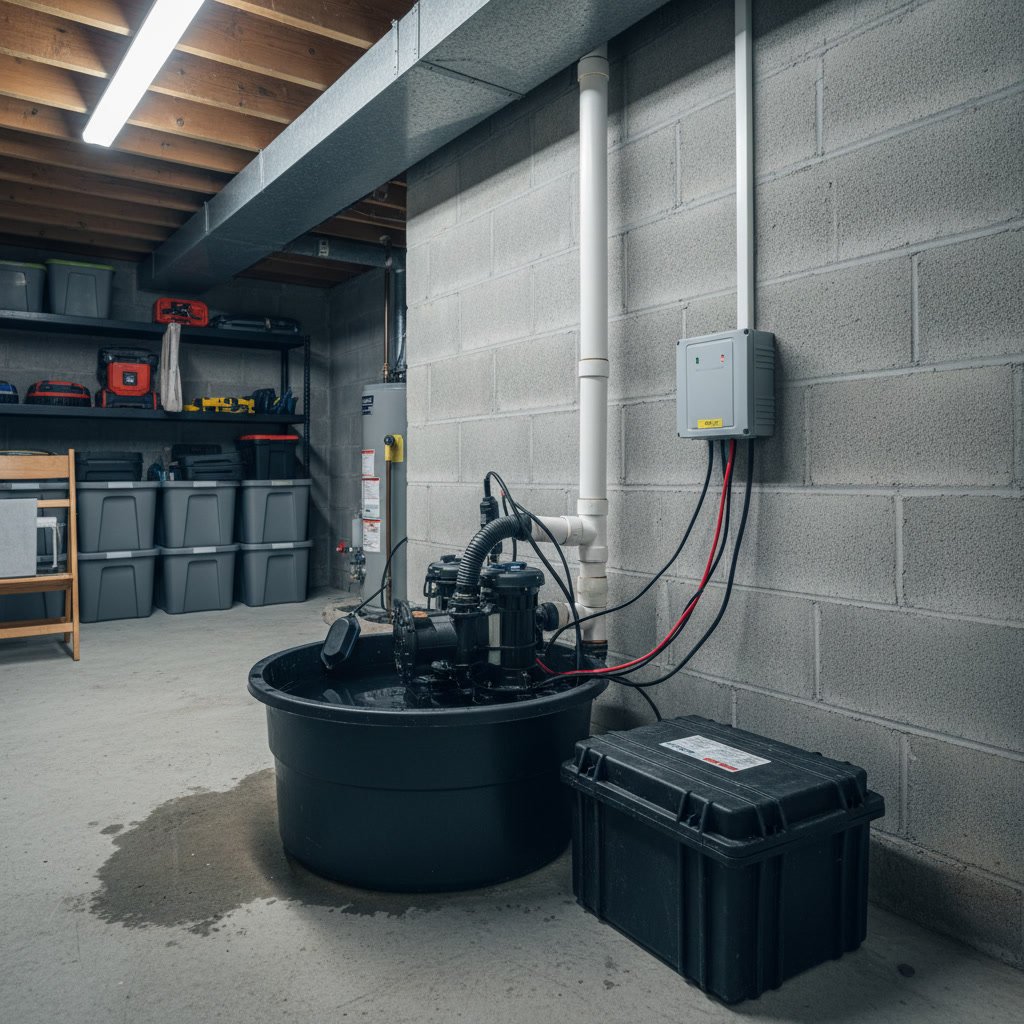
The mechanics behind a battery backup sump pump are straightforward but effective. The system consists of three main components: the backup pump, a deep-cycle battery, and a control unit.
The Charging and Monitoring Phase
When your home has power, the control unit keeps the battery fully charged and continuously monitors your primary pump’s activity. Most quality systems include indicators that show battery charge level and system status.
The control panel tests the system regularly to ensure everything works properly. If the battery begins to lose capacity or the pump develops issues, you’ll receive a warning through audible alarms or indicator lights.
Activation and Operation
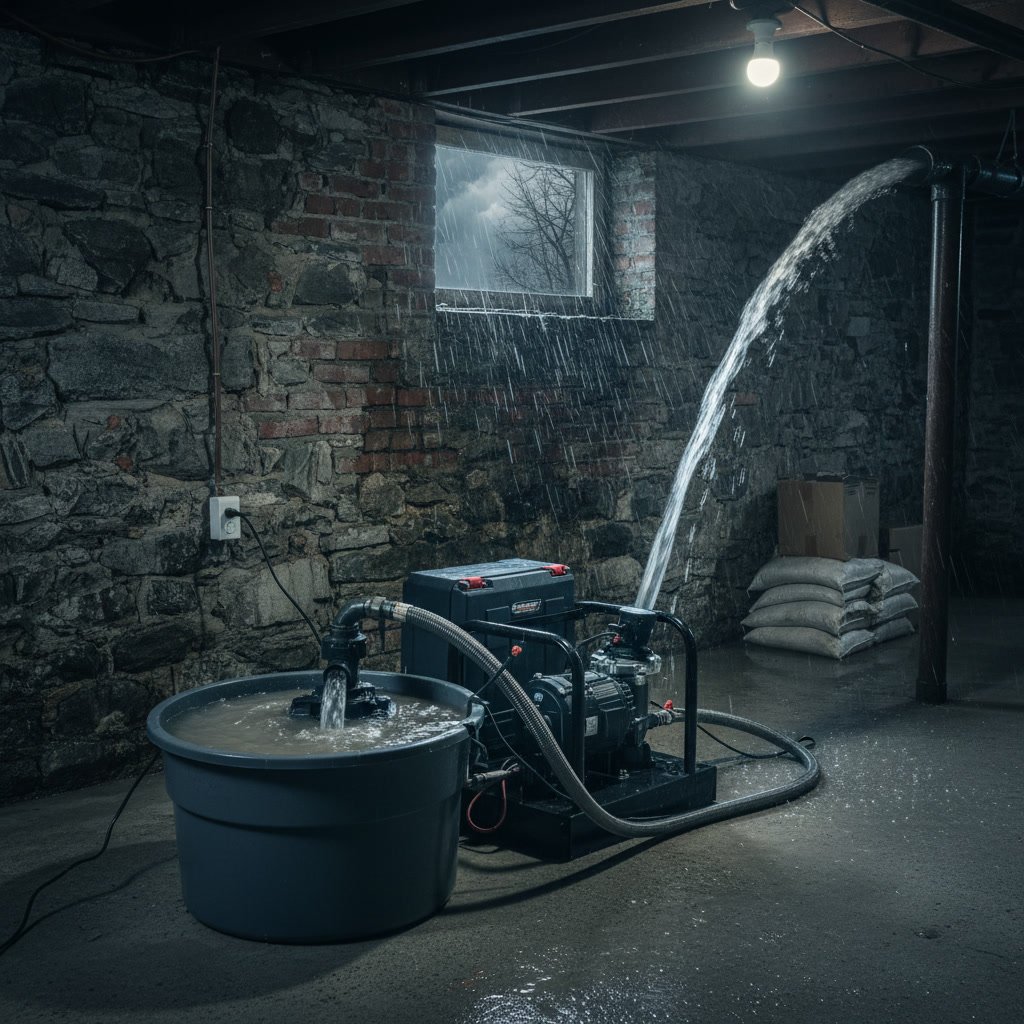
When water rises in your sump basin and the primary pump fails to respond, or when power is lost, the backup system activates automatically. The battery-powered pump begins removing water at rates typically between 1,000 and 3,000 gallons per hour, depending on the model.
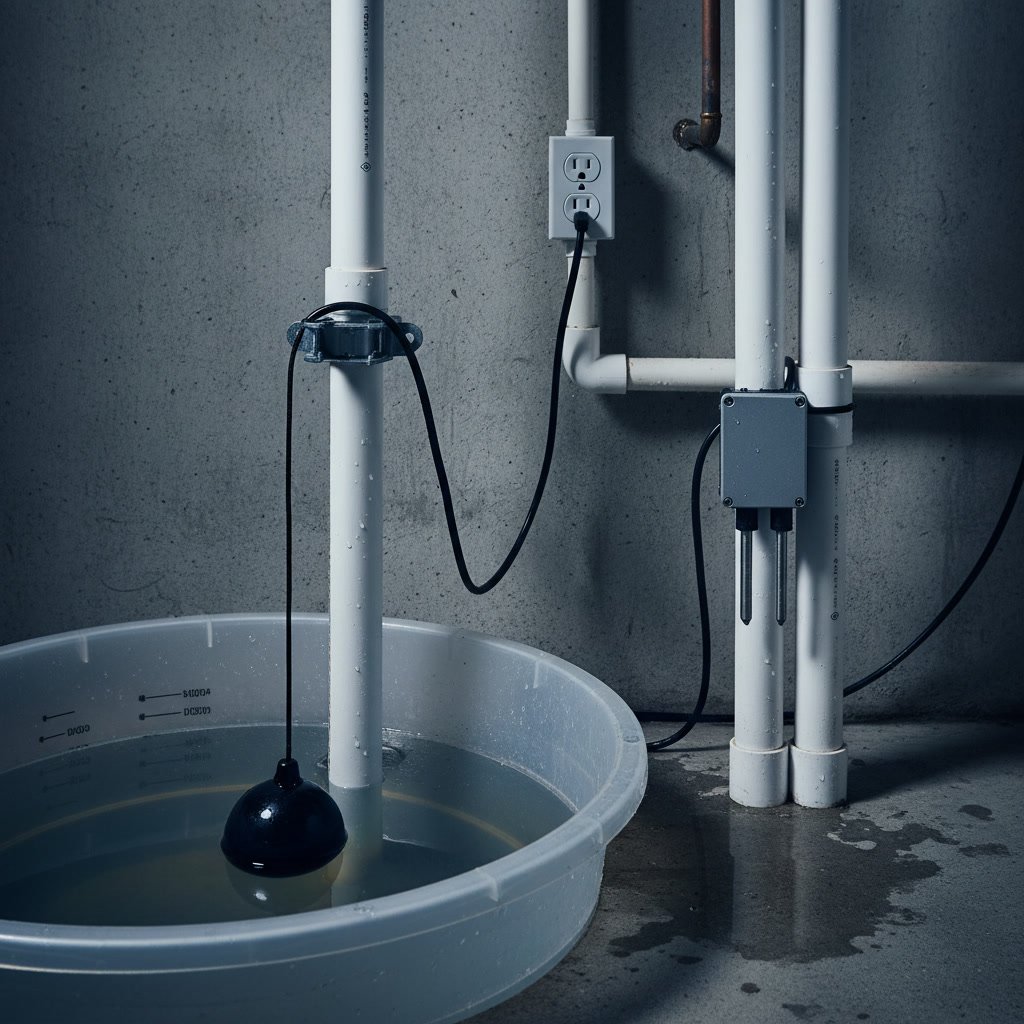
Most backup pumps use a float switch positioned higher than the primary pump’s switch. This ensures the primary pump handles normal conditions while the backup only runs when water reaches a critical level.
Runtime and Capacity
A fully charged battery can typically run the backup pump for 5 to 7 hours of continuous operation, though this varies based on how frequently the pump cycles. In real-world conditions where the pump runs intermittently, a good battery can protect your basement for 24 hours or more during an extended outage.
Why New Hampshire Homes Are at Higher Risk
New Hampshire’s climate and weather patterns create specific challenges that make backup systems particularly important for homeowners throughout the state.
Spring thaw events bring rapid snowmelt that saturates the ground while spring rains add to the water load. Your sump pump works overtime during these periods, and if a storm causes a power outage during peak groundwater season, the risk of basement flooding increases dramatically.
Nor’easters frequently knock out power across the region. These storms combine heavy precipitation with high winds that down power lines, sometimes leaving homes without electricity for days. Communities from Portsmouth to Concord experience these extended outages regularly.
The soil composition throughout much of New Hampshire includes clay and ledge that doesn’t drain quickly. This means water sits around your foundation longer, putting constant pressure on your basement waterproofing system and sump pump.
Types of Battery Backup Sump Pumps
Not all backup systems are created equal. Understanding the different types helps you choose the right protection for your home.
DC Battery-Powered Systems
These systems run on 12-volt marine batteries and represent the most common type of backup pump. They’re reliable, affordable, and provide solid protection for most homes. The batteries typically last three to five years before needing replacement.
DC systems work well for standard basement sizes and typical water infiltration rates. They handle most power outage scenarios effectively, especially when paired with a quality deep-cycle battery.
Combination AC/DC Pumps
Some backup pumps can operate on both AC power and battery power. These units serve as both a secondary pump during normal operation and a backup during outages, providing an extra layer of protection.
While more expensive upfront, combination systems offer redundancy even when power is available. If your primary pump fails mechanically during normal conditions, the combination unit takes over immediately.
Water-Powered Backup Pumps
These systems use municipal water pressure instead of electricity or batteries. They have no moving parts that can fail and never need charging. However, they require adequate water pressure (typically 50 PSI minimum) and increase your water bill during operation.
Water-powered backups work indefinitely as long as your water supply continues, making them excellent for extended outages. They’re particularly useful for homes with wells that have generators, ensuring backup protection even if the battery system is depleted.
Key Features to Look For
When selecting a battery backup sump pump, certain features separate reliable systems from inadequate ones.
Pumping capacity matters significantly. Look for systems that can move at least 1,500 gallons per hour at a 10-foot discharge head. Homes with higher water tables or larger basements may need 2,000 GPH or more.
Battery size determines runtime. Larger amp-hour (AH) ratings mean longer operation during outages. A 75 AH battery provides substantially more protection than a 40 AH unit, though it costs more and takes up more space.
Alarm systems alert you to problems before they become emergencies. Quality backup systems include both audible alarms and visual indicators for high water, low battery, pump failure, and system malfunctions.
Pro Tip: Choose a system with a sealed, maintenance-free battery. These AGM (Absorbed Glass Mat) batteries handle the charge-discharge cycles better than traditional wet-cell batteries and won’t leak acid if tipped over.
The control panel should be user-friendly with clear indicators. You shouldn’t need an engineering degree to understand your system’s status at a glance.
Installation and Maintenance Requirements
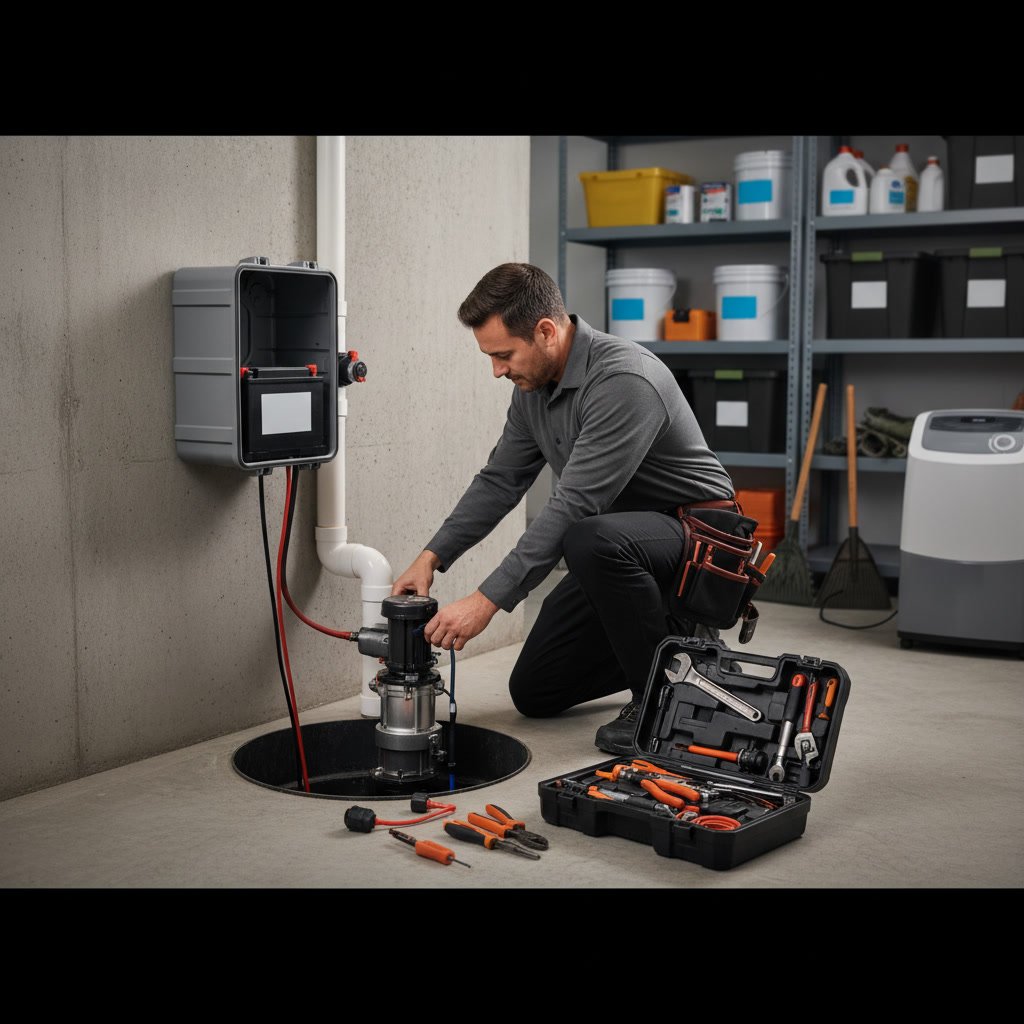
Professional installation ensures your battery backup sump pump functions correctly when you need it. The system requires proper placement in the sump basin, correct switch positioning, and secure electrical connections to the charging unit.
The battery needs adequate ventilation to prevent hydrogen gas buildup during charging. Most installations place the battery and control unit on a shelf or wall-mounted bracket near the sump pit but above potential flood levels.
Regular maintenance keeps the system reliable. Test your backup pump every three to four months by simulating a power failure or triggering the float switch manually. This ensures the pump activates properly and the battery holds a sufficient charge.
Clean the pump intake screen and check the discharge line for obstructions annually. Frozen discharge lines are common in New Hampshire winters, so ensure your exterior discharge point allows for proper drainage even in freezing conditions.
Battery replacement typically occurs every three to five years, depending on usage and quality. Mark the installation date on your calendar and budget for replacement before the battery fails. A dead battery provides no protection during the next outage.
Cost Considerations and Value
Battery backup sump pump systems typically range from $400 to $1,200 for the equipment, with installation adding another $200 to $500 depending on the complexity of your setup. While this represents a meaningful investment, consider it against the cost of basement flooding.
Water damage from a flooded basement easily reaches $5,000 to $15,000 or more when you factor in damaged belongings, drywall replacement, flooring, and potential mold prevention work. Many homeowners in Manchester and surrounding areas have learned this lesson the hard way after a single storm.
Insurance deductibles for water damage often exceed the cost of installing a backup system. Some insurance providers even offer premium discounts for homes with proper backup protection, though you should verify this with your specific carrier.
The peace of mind during storm season has real value too. Knowing your basement stays protected even when you’re away from home or sleeping through a middle-of-the-night power outage eliminates significant stress.
Real-World Performance in New Hampshire Conditions
Homeowners throughout New Hampshire depend on battery backup systems during the region’s challenging weather. The December ice storms that regularly impact the seacoast region test these systems thoroughly, often causing outages lasting 48 hours or more.
Spring presents another critical test. March and April bring fluctuating temperatures that create freeze-thaw cycles, heavy rains, and saturated ground. Homes in areas like Rochester and Lee face particularly high water tables during these months.
The system’s effectiveness depends on proper sizing and installation. An undersized backup pump or inadequate battery capacity won’t provide adequate protection during severe weather events. Working with experienced professionals ensures your system matches your home’s specific needs.
Homes with comprehensive drainage systems and proper waterproofing reduce the workload on both primary and backup pumps. A multi-layered approach to water management provides the most reliable protection.
Integration with Complete Waterproofing Systems
A battery backup sump pump works best as part of a comprehensive basement protection strategy. While the backup pump prevents flooding during power outages, other components address different moisture challenges.
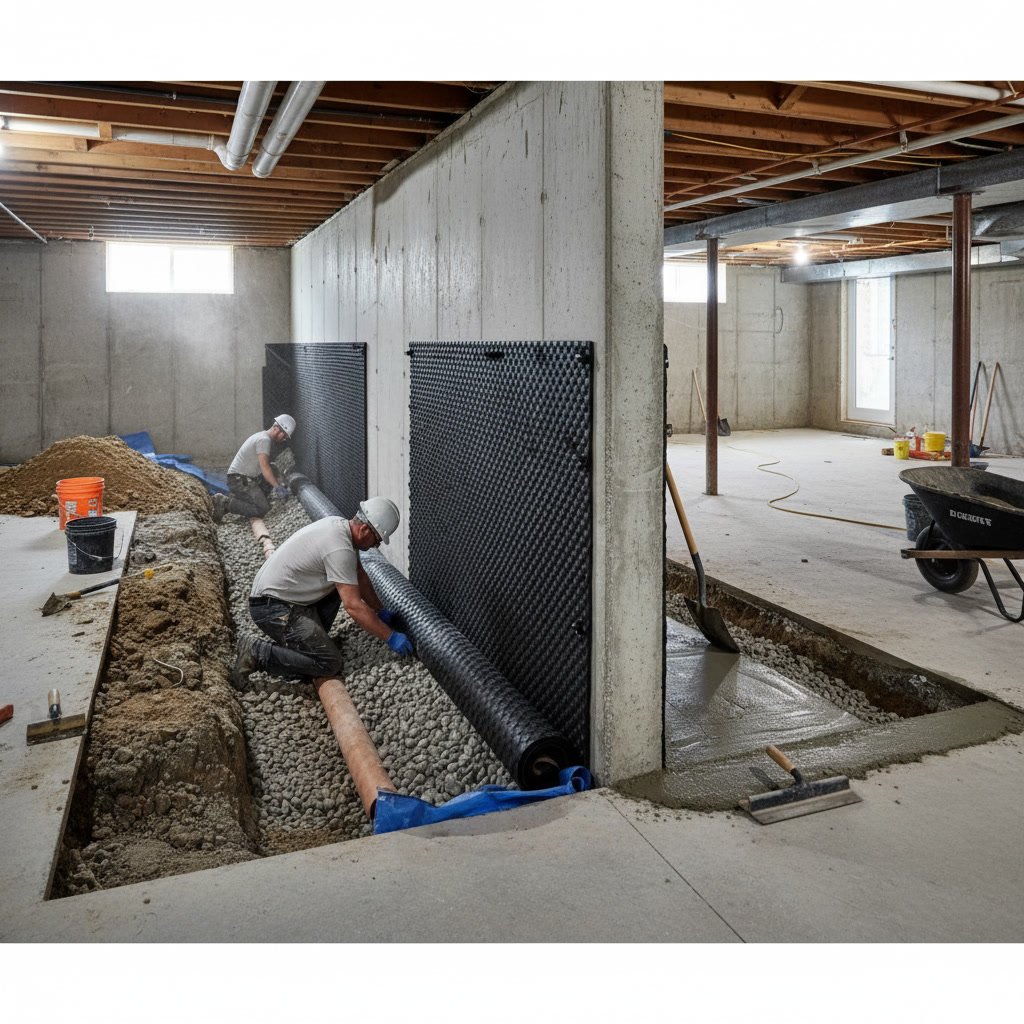
Proper exterior grading and gutters reduce the water volume reaching your foundation. Interior drainage systems collect and channel water to your sump basin efficiently. These measures reduce how often your pumps need to run, extending battery life during outages.
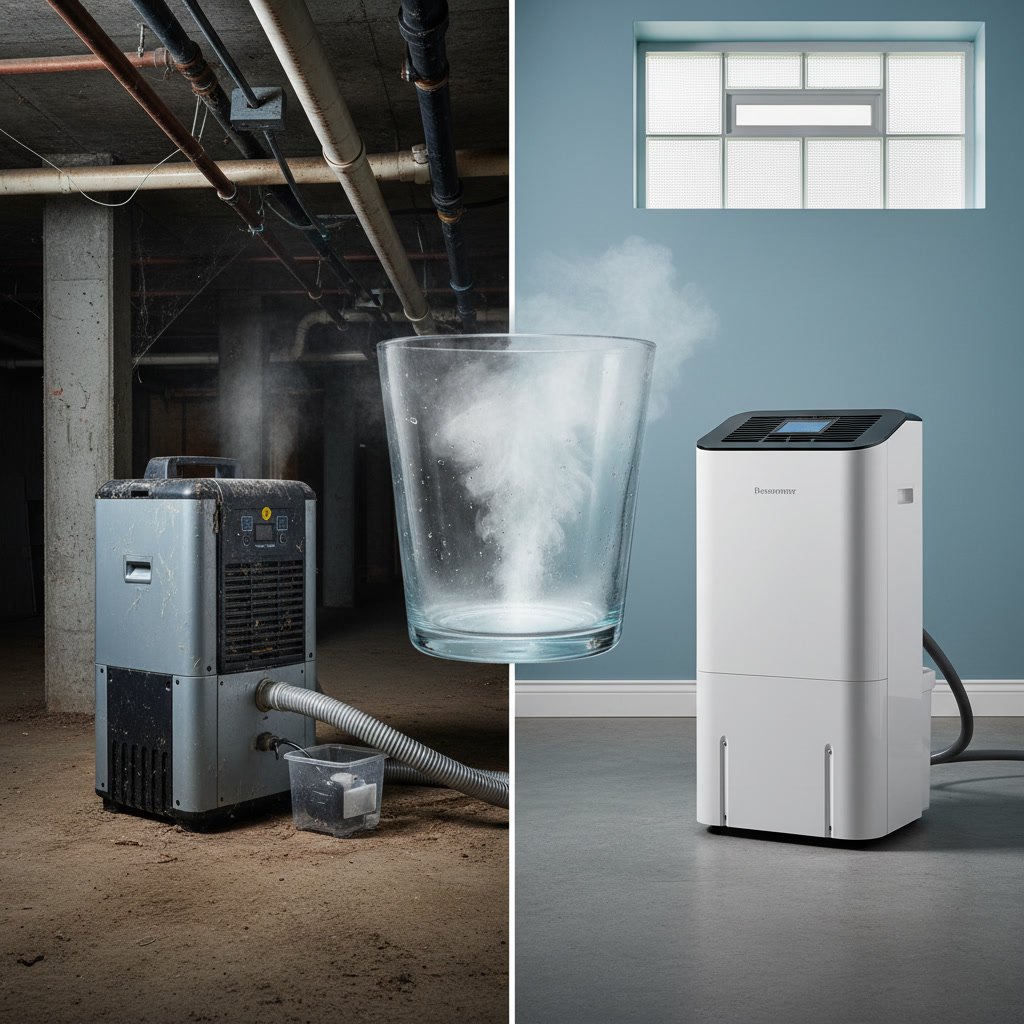
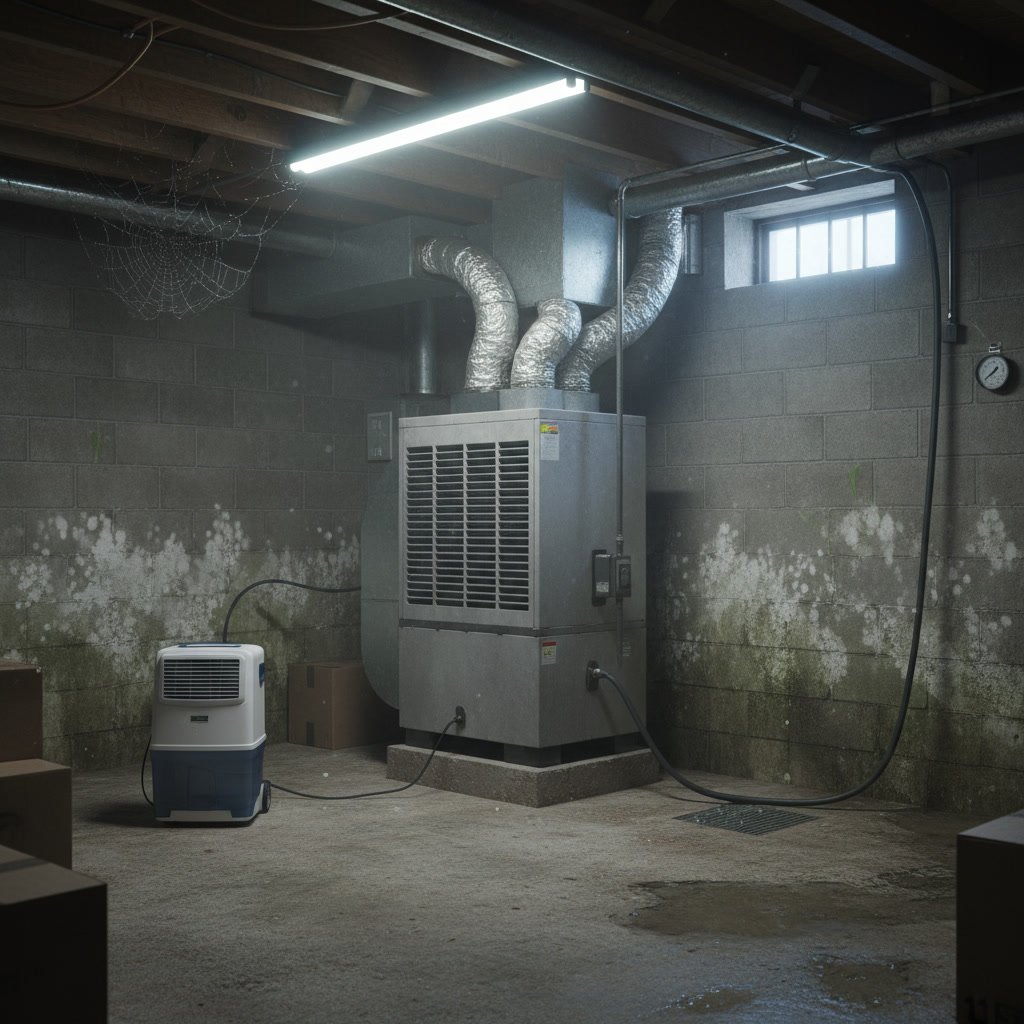
Humidity control through basement dehumidification prevents moisture problems even when standing water isn’t present. High humidity creates ideal conditions for mold growth and musty odors that degrade air quality throughout your home.
For homes with crawl spaces instead of full basements, similar protection principles apply through crawl space waterproofing and drainage solutions. These areas face the same flooding risks during power outages but often receive less attention from homeowners.
Frequently Asked Questions
How long will a battery backup sump pump run during a power outage?
Runtime depends on battery size and how frequently the pump cycles. A quality system with a 75 AH battery typically provides 5 to 7 hours of continuous pumping or 24 to 48 hours of intermittent operation during typical storm conditions. Larger batteries extend these timeframes significantly.
Can I install a battery backup sump pump myself?
While some homeowners with electrical and plumbing experience can handle installation, professional installation ensures correct switch positioning, proper battery ventilation, and reliable operation. Incorrect installation can result in system failure during the emergency it was designed to prevent. The modest installation cost provides significant value compared to the risk of improper setup.
How often should I replace the battery in my backup sump pump?
Most batteries last three to five years depending on usage, quality, and maintenance. Replace the battery proactively before it fails rather than waiting for reduced performance. Test your system regularly and watch for indicators showing decreased capacity or longer charging times.
Will a battery backup sump pump work if my primary pump fails mechanically?
Yes, most battery backup systems activate when water rises above the primary pump’s float switch level, regardless of whether the failure is due to power loss or mechanical problems. This dual protection guards against both power outages and equipment failure.
Do battery backup sump pumps work in freezing temperatures?
The pump mechanism itself operates fine in cold conditions, but battery performance decreases in extreme cold. Keep the battery in a temperature-controlled basement rather than an unheated space. The bigger concern is frozen discharge lines, which prevent any pump from working effectively regardless of power source.
Protecting Your Investment
Your home represents likely your largest financial investment, and the basement provides critical living or storage space. A flooded basement damages more than just your property. It disrupts your family’s daily life, creates health hazards through mold growth, and causes stress that extends far beyond the immediate cleanup.
A battery backup sump pump provides affordable insurance against these problems. The system works silently in the background, requiring minimal attention while delivering protection during the most critical moments.
For homeowners throughout New Hampshire, this protection isn’t optional. The state’s weather patterns virtually guarantee you’ll face situations where backup pumping capacity prevents disaster. The question isn’t whether you’ll experience a power outage during heavy precipitation, but when.
NH Dry Basement LLC installs and services battery backup systems for homeowners throughout the region. As a family-owned business based in Barrington, we understand the specific challenges New Hampshire weather creates for basement protection. We’ll assess your home’s needs, recommend appropriate equipment, and ensure your system provides reliable protection for years to come. Contact us at +16032359598 to discuss backup sump pump options for your home.